What happens when the people entrusted with making decisions become more concerned with maintaining control than listening to those they represent?
Leadership comes with authority, responsibility, and the expectation of making difficult choices. However, when political disagreements become personal battles, the consequences can extend far beyond government chambers. Ordinary citizens, workers, and entire communities may find themselves affected by decisions shaped by rivalry, ambition, and competing interests.
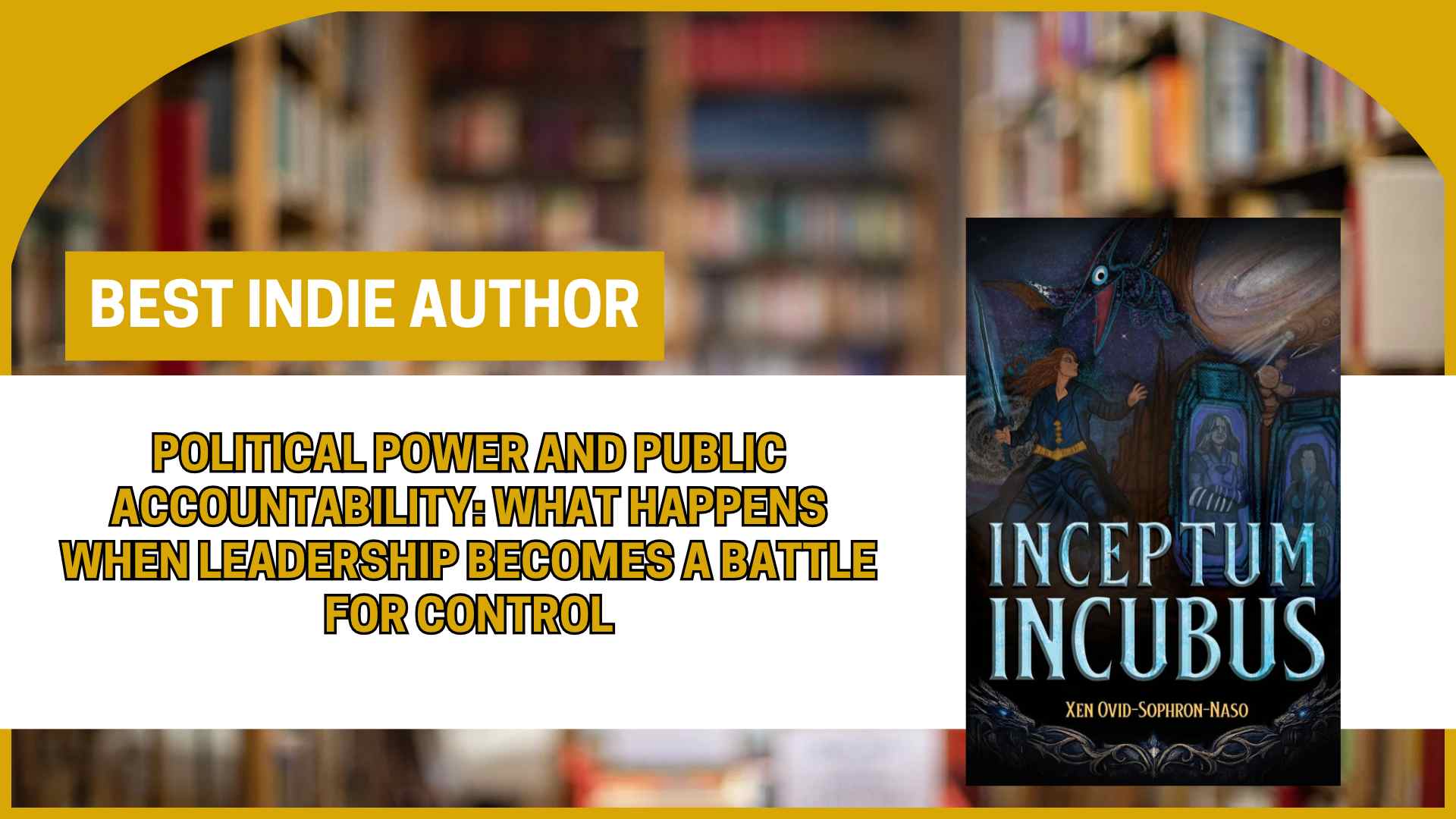
This tension is central to the futuristic political world of Inceptum Incubus by Xen Ovid-Sophron-Naso, where intergalactic governments navigate conflicts involving political authority, technological advancement, criminal justice, and international relations.
WHEN POLITICAL DISAGREEMENTS BECOME PERSONAL BATTLES
One of the most revealing aspects of political power is how leaders respond to criticism. Public questioning is an essential part of accountable governance, but disagreement can become confrontation when officials treat opposing viewpoints as personal attacks.
Within the fictional Saxon Imperial House, televised parliamentary sessions repeatedly expose tensions between Prime Minister Margaretta Du Plessis and opposition leaders. Discussions about government policies frequently develop into heated exchanges, personal accusations, and public disputes.
During one particularly tense session, the Prime Minister demands that a live broadcast be terminated after an uncomfortable discussion involving her family. The House Speaker refuses, maintaining that the public has a right to know what is happening.
The confrontation raises an important question: Should political authority determine what citizens are allowed to hear, or should public scrutiny remain independent of those holding power?
THE HUMAN CONSEQUENCES OF GOVERNMENT DECISIONS
Accountability becomes equally important when government decisions directly affect people’s livelihoods.
In Inceptum Incubus, political leaders introduce advanced androids to replace biological workers across several industries. Although alternative employment is promised, displaced workers are required to relocate to distant mining colonies. Those refusing the arrangement face severe legal consequences.
For government officials, the policy represents technological progress and economic efficiency. For the opposition, it raises concerns about employment, personal freedom, and the treatment of ordinary workers.
Such disagreements highlight why responsible decision-making requires more than announcing a policy and expecting compliance. People affected by major changes deserve clear explanations, meaningful consideration, and opportunities to express their concerns.
WHEN ECONOMIC DISPUTES ESCALATE INTO CONFLICT
Political power also influences how governments handle economic disagreements.
The fictional conflict between Orion and Andromeda develops around mineral taxation, wages, and working conditions. What begins as an economic disagreement escalates into military confrontation before a settlement introduces revised taxation and compensation.
This scenario illustrates how unresolved disagreements can become increasingly destructive when competing authorities turn toward force rather than negotiation.
The political world constructed by Xen Ovid-Sophron-Naso also contains courts imposing extraordinary sentences, intelligence operations, and criminal investigations that cross galactic jurisdictions. Together, these situations invite reflection on the relationship between legal authority, political influence, and individual rights.
WHY PUBLIC ACCOUNTABILITY MATTERS IN LEADERSHIP
Outside fiction, the broader lesson is relevant to any institution where people exercise power over others.
Effective accountability involves transparent decisions, opportunities for legitimate disagreement, and a willingness to examine the consequences of political action. Authority may allow leaders to implement decisions, but it does not automatically establish that those decisions are fair or responsible.
Leaders who acknowledge criticism and consider different perspectives create opportunities for more informed decisions. Those who dismiss concerns risk overlooking the people most affected by their policies.
The real measure of leadership is not how successfully someone maintains control, but whether that power is exercised with responsibility, restraint, and respect for the people affected by it.
Explore the book:
Available through the following retailers:
Barnes & Noble: https://www.barnesandnoble.com/w/1150781729
Amazon: https://www.amazon.com/dp/1806935279
Walmart: https://www.walmart.com/ip/Inceptum-Incubus-Paperback/20595622835