For generations, academic success has often been measured by a familiar set of numbers: grades, test scores, rankings and university admissions.
These measures matter. But are they enough?
A child can learn how to memorize information, perform well under exam conditions and follow instructions without necessarily learning how to think independently. In a rapidly changing world, that gap matters more than ever.
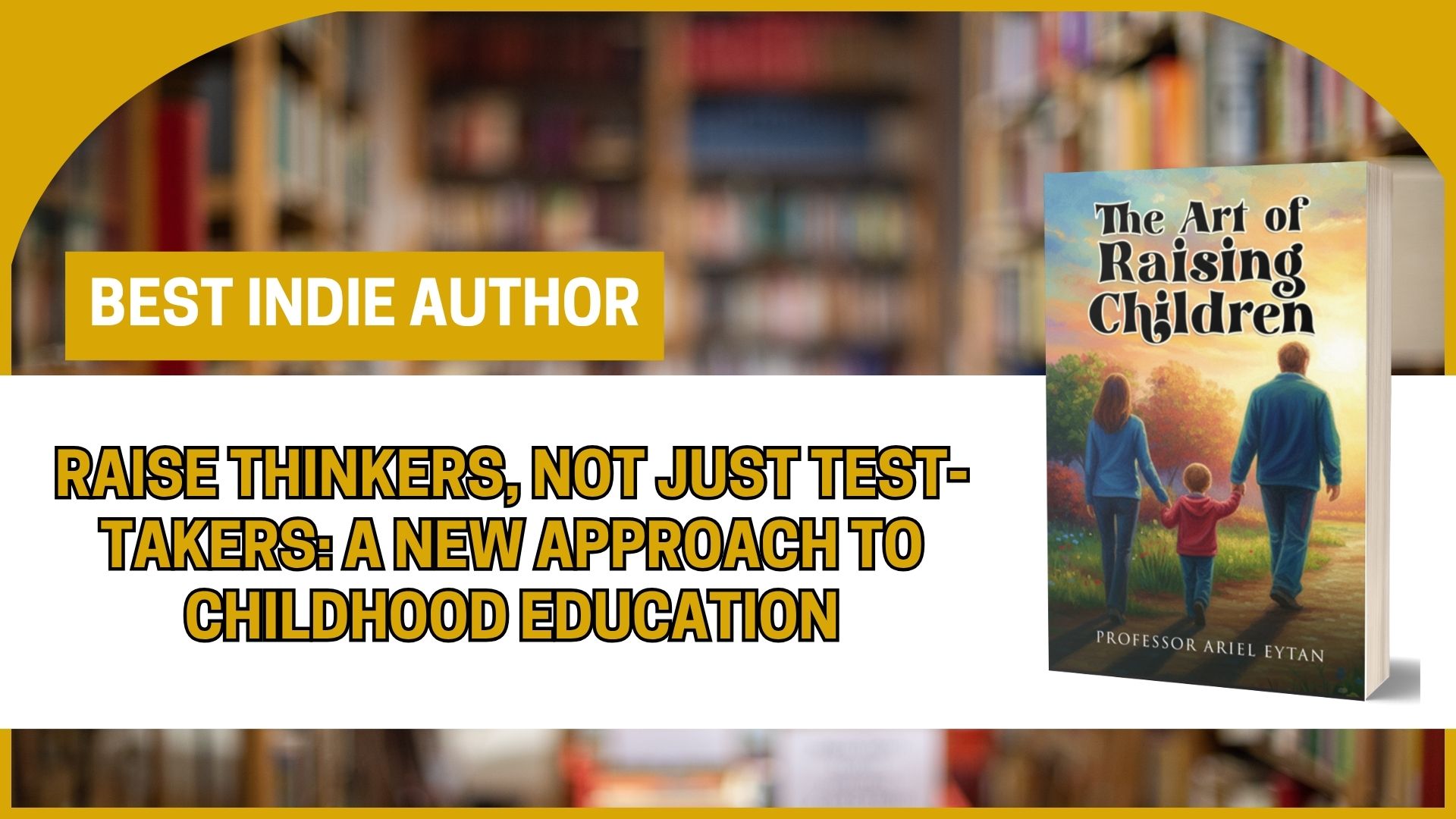
In The Art of Raising Children, Professor Ariel Eytan encourages parents to rethink what education should truly accomplish. The goal, he suggests, should not be simply to raise children who can pass tests. It should be to raise curious, capable thinkers who can ask questions, solve problems, adapt to change and continue learning throughout life.
Curiosity Is More Powerful Than Memorization
Children are naturally curious. They ask why, how, what if and why not.
Rather than treating these questions as distractions from learning, parents and educators can recognize them as the beginning of real education.
Professor Eytan emphasizes the importance of encouraging inquiry, critical thinking and intellectual independence. Children should have opportunities to examine ideas, question assumptions, discuss different perspectives and connect what they learn to real-life situations.
When children understand why something matters, learning becomes more than an assignment. It becomes meaningful.
Let Children Participate in Their Learning
Another important idea in The Art of Raising Children is that education should not always be something adults simply deliver to children.
Children can become active participants.
Parents can encourage them to explore subjects that interest them, investigate questions, experiment, read widely, create projects and discover answers independently. This kind of child-led learning can build confidence as well as curiosity.
At the same time, adults remain essential role models. Children learn not only from what parents tell them, but also from watching how adults approach challenges, solve problems, communicate and continue learning themselves.
A home where curiosity is welcomed can become one of a child’s most important classrooms.
Discipline and Questioning Can Work Together
One of the distinctive aspects of Professor Eytan’s book is its cross-cultural perspective.
He explores how valuable elements of East Asian educational traditions, including discipline, perseverance, strong academic foundations and respect for teachers, can be considered alongside Jewish educational traditions that often emphasize questioning, discussion, interpretation and debate.
These approaches do not have to compete.
A child can learn discipline without becoming afraid to question. A child can respect teachers while still developing independent judgment. Strong foundational knowledge can coexist with creativity and intellectual exploration.
The result is a more balanced vision of education: children who know how to work hard, but also know how to think.
Teach Children That Mistakes Are Part of Learning
Test-driven environments can sometimes make mistakes feel dangerous.
But mistakes are often where the deepest learning begins.
Professor Eytan highlights the value of a growth mindset: the understanding that abilities can develop through effort, practice, reflection and persistence.
Instead of asking only, “What grade did you get?” parents might also ask:
“What did you discover?”
“What was difficult?”
“What would you do differently next time?”
“What question do you still have?”
Questions like these shift the focus from performance alone to development.
Education Should Prepare Children for Life
The world children inherit will demand more than the ability to remember correct answers.
They will need creativity, adaptability, communication, resilience, judgment and the confidence to approach unfamiliar problems.
That is why The Art of Raising Children offers a timely message for parents: academic achievement should be part of education, but it should never become its entire purpose.
The ultimate goal is not merely a child who knows how to take a test.
It is a child who knows how to think, question, learn, grow and face the future with confidence.