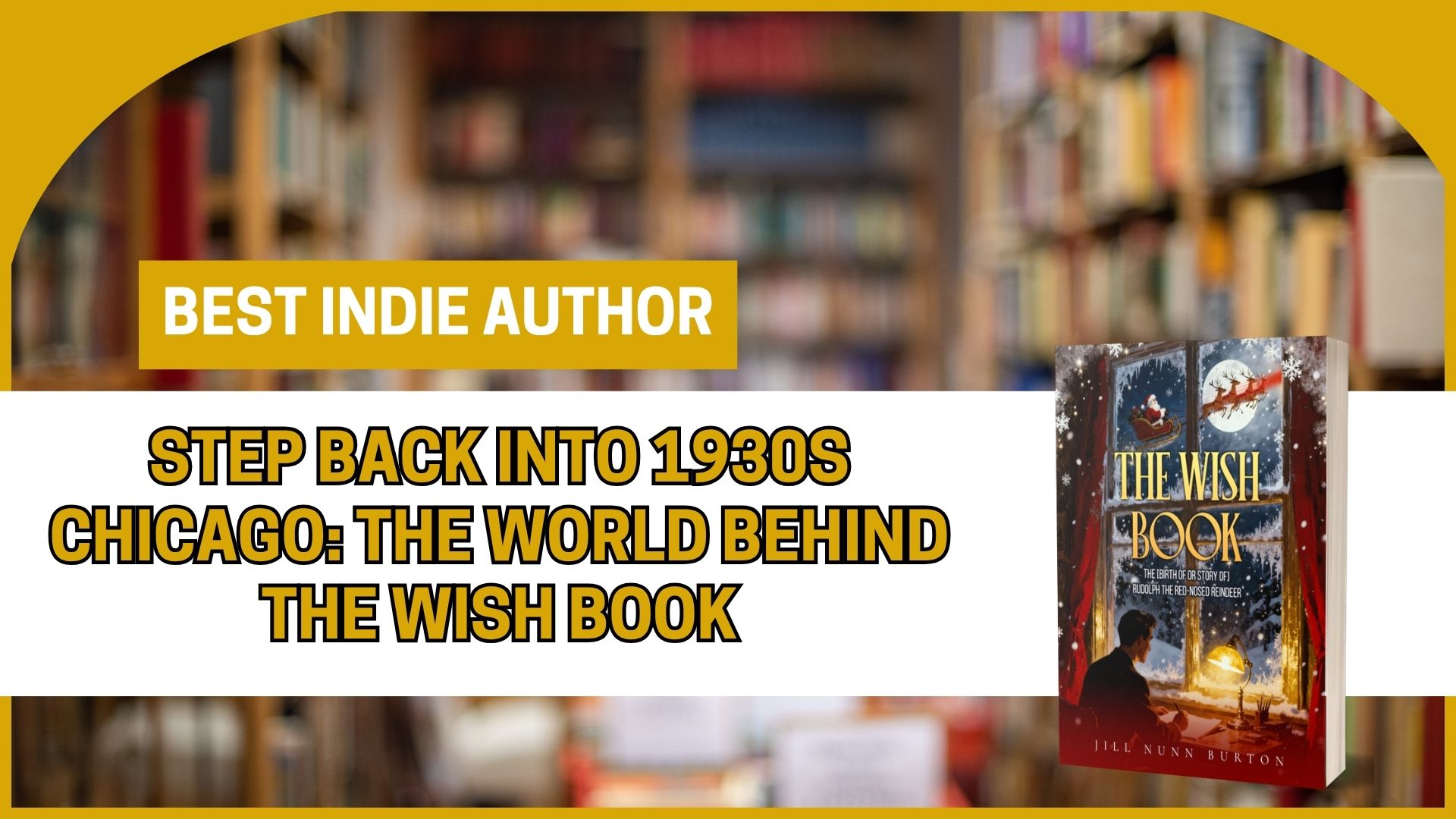
Step back into 1930s Chicago, where ambition, commerce and creativity collided in a city still defining modern American culture. Jill Nunn Burton’s The Wish Book transports readers into this vibrant world through the eyes of Robert May, a Montgomery Ward copywriter whose life unexpectedly intertwines with one of the most enduring holiday stories ever written.
In this era, Chicago is a hub of industry and imagination. Inside grand spaces like the Palmer House Hotel’s Empire Room, orchestras play swing music while business leaders and creatives shape the future of American retail. Department stores and mail-order giants compete fiercely and seasonal catalogs become cultural events rather than just shopping tools. The Wish Book itself represents more than advertising; it becomes a symbol of aspiration for families across the country.
At Montgomery Ward, Rob May works under pressure to innovate for each holiday season. The stakes are high, with competitors like Sears constantly pushing for dominance. Yet beneath the corporate rivalry lies something more personal: the struggle of a man balancing creativity, family and emotional hardship. His home life with Lynnie and their daughter, Barbie, adds depth and heart to his professional journey, grounding his ambitions in love and responsibility.
Chicago in the late 1930s is also a city shaped by radio broadcasts, World’s Fair excitement and a growing national appetite for storytelling. From crackling radios airing programs like Little Orphan Annie to news of the upcoming 1939 World’s Fair, the world feels both local and expansive. These influences seep into Rob’s imagination, helping transform a simple promotional idea into a cultural phenomenon.
As Rob’s creation evolves into the beloved Rudolph story, The Wish Book captures the tension between corporate ownership and individual authorship. Who owns an idea once it enters the world? And what does it cost the creator when success outgrows recognition? These questions echo through boardrooms, legal offices and quiet personal moments alike.
Yet beyond business and legalities, the heart of the story remains deeply human. Friendship, mentorship, grief and hope shape every decision. Characters like Johnny Marks, Maggie, Simon and Marty reflect the collaborative spirit of the era, where ideas are shared, challenged and refined in real time.
Ultimately, The Wish Book is more than a story about a famous holiday character; it is a window into 1930s Chicago, where imagination met industry and changed Christmas forever. Through its pages, readers are invited to experience a world where creativity could emerge from a catalog department and become a legacy that lasts generations.
Readers of The Wish Book are invited to rediscover the warmth of early American retail culture while also exploring the emotional depth behind its creation. Jill Nunn Burton captures not only a historical setting but also the timeless human desire to create something meaningful that outlives its origins. In doing so, she offers a story that resonates with anyone who has ever wondered how ideas become legacies and how ordinary moments can shape extraordinary outcomes. The novel stands as both tribute and exploration of creativity, resilience and memory set against the unforgettable backdrop of a city on the rise and a season that defines hope itself, making it a must-read for lovers of historical fiction and holiday storytelling alike that endures across generations and seasons of time.
Visit my Profile : https://x.com/JillNunn21627
christmashistory #chicagohistory #historicalfiction #copyrightstory #holidaystory #rudolph #rednose