Hell is a concept that transcends religious doctrine, deeply embedded in literature, philosophy, and culture. The way Hell is depicted in religious texts and literary works often serves as a mirror of humanity’s moral and spiritual consequences, emphasizing the severity of sin and rebellion. From dark, desolate cities to infinite wastelands, these portrayals not only serve as punishment but also reflect the deep spiritual and existential isolation that sin creates. In exploring these depictions, one can see how Hell is not merely a place of torment, but a reflection of the soul’s detachment from divine goodness.
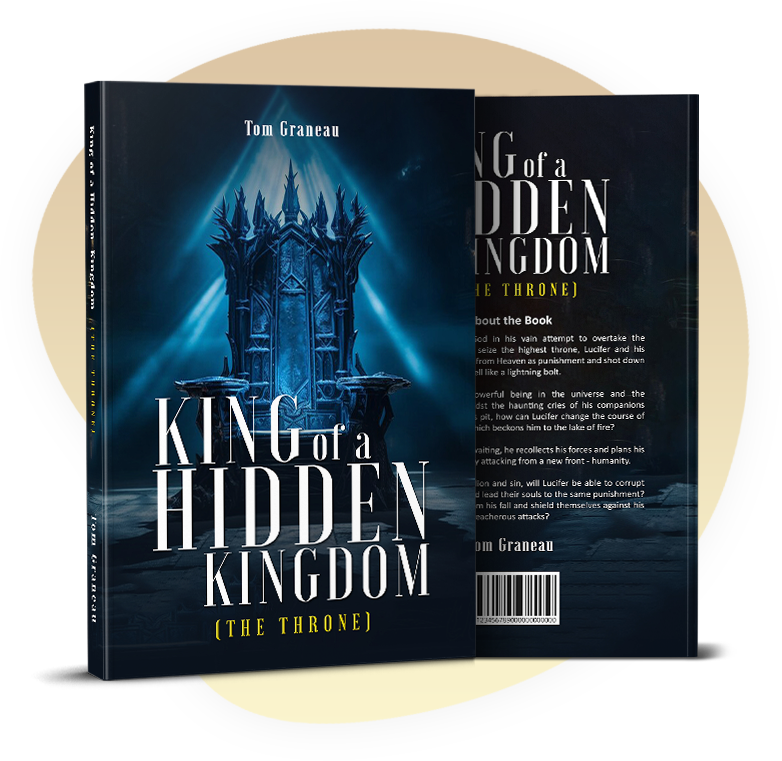
In many religious traditions, Hell is seen as a place of eternal punishment for the wicked, a place where those who have turned away from God face the consequences of their rebellion. The Bible, for example, often describes Hell in terms of darkness, fire, and desolation. In King of a Hidden Kingdom: THE THRONE by Tom Graneau, Hell is not just a physical realm of suffering but a spiritual state of separation from God’s presence. The book paints Hell as a place where the beauty of creation is stripped away, and the eternal light of divine grace is replaced with suffocating darkness. This mirrors many literary depictions where Hell is a land devoid of life, hope, or redemption.
The desolate cities or barren wastelands that characterize Hell in various texts symbolize the moral decay and isolation that sin brings. These images evoke the idea that Hell is not merely a place of external torment but an internal condition—a reflection of the state of the soul that has chosen rebellion over submission to divine will. In THE THRONE, Graneau explores the idea that those who choose to separate themselves from God find themselves in an eternal wasteland of their own making, a spiritual desolation where all beauty, love, and grace are absent.
One of the most striking elements of Hell’s depiction in literature is the use of emptiness to reflect the consequences of sin. This idea is not merely about physical suffering, but the soul’s ultimate desolation. The dark wastelands, empty cities, and endless pits all emphasize that Hell is a place where one is cut off from the very things that make life meaningful—love, beauty, peace, and joy. The characters in THE THRONE who fall from grace find themselves trapped in these desolate places, their eternal fate sealed by the choices they made in life. Hell, in this sense, becomes a metaphor for the loss of communion with the divine and the complete absence of all things good.
Moreover, these literary depictions also stress the inescapability of Hell for those who choose sin. The eternal nature of the torment reflects the permanence of spiritual separation. It is not a temporary punishment, but a permanent state, symbolizing the irrevocable consequences of moral failure and the failure to choose redemption. THE THRONE illustrates this finality through its portrayal of characters who, once they turn away from the divine, are lost to a darkness they cannot escape.
In conclusion, Hell, as depicted in religious and literary texts, serves as a profound commentary on the consequences of sin and rebellion. Through the imagery of desolate cities and dark wastelands, these works explore the spiritual emptiness that sin brings and the eternal separation from divine grace that Hell represents. The construction of Hell in literature is not just about physical suffering but a stark reminder of the moral choices that lead to spiritual desolation, reinforcing the idea that sin brings not only suffering but eternal isolation.