There is one assumption about foster care that sounds comforting but can leave caregivers seriously unprepared.
It is the belief that babies are easier to foster because they are too young to have experienced trauma.
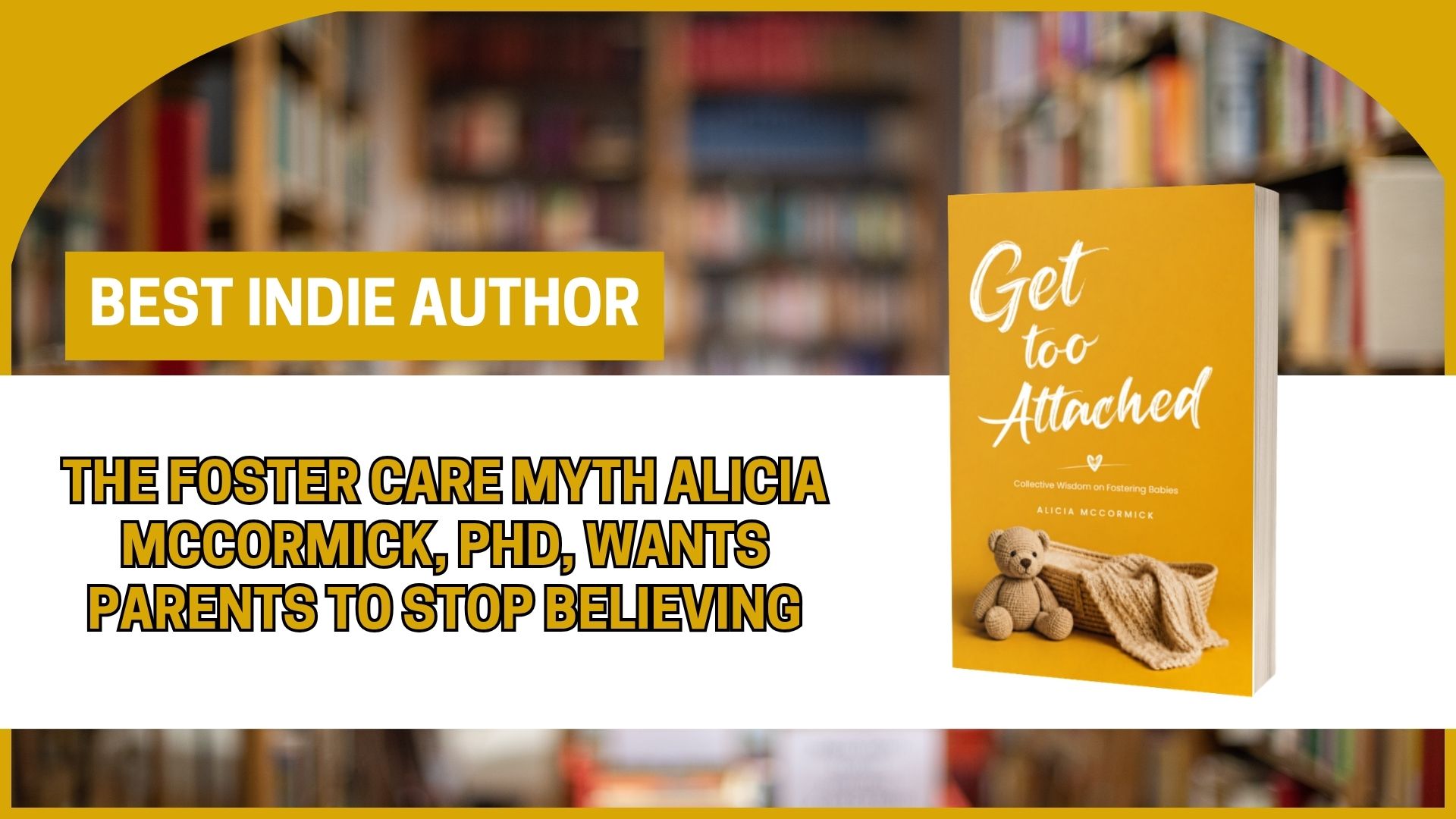
In Get Too Attached: Collective Wisdom on Fostering Babies, Alicia McCormick, PhD, challenges that idea directly. Through her own experience and the stories of other foster parents, she shows that babies can enter foster care carrying the effects of stress, separation, neglect, prenatal substance exposure, medical complications and disrupted attachment.
They may not have words for what happened.
But that does not mean nothing happened.
Babies Are Not Blank Slates
Many people assume that trauma only matters when a child is old enough to remember an event consciously. The foster parents featured in McCormick’s book describe a different reality.
Some babies struggle to eat. Some barely sleep. Others cry for hours and are difficult to soothe. In some cases, babies appear unusually quiet and “easy,” only for caregivers to realize that their lack of crying may reflect previous experiences in which crying did not reliably bring comfort or attention.
McCormick also describes babies who enter foster care after stressful pregnancies or prenatal substance exposure, as well as the disruption that occurs when a newborn suddenly loses the familiar voices, smells and sensations connected to their biological family.
Understanding this changes how foster parents respond.
Instead of asking, “Why is this baby so difficult?” caregivers can begin asking, “What might this baby need in order to feel safe?”
Love Matters, but Knowledge Matters Too
Another misconception Get Too Attached addresses is the idea that enough love will automatically erase trauma.
Love is essential but foster parents in the book repeatedly explain that love alone is not always enough.
Children may also need early intervention, occupational or physical therapy, feeding support, medical care, trauma-informed parenting strategies, predictable routines and caregivers who understand emotional co-regulation.
This is why McCormick encourages foster parents to keep learning. Trauma-informed classes, support groups, professional guidance and relationships with experienced foster parents can help caregivers understand behaviors that might otherwise be misinterpreted.
The Goal Is Not Emotional Distance
The book also confronts another familiar phrase: “I could never foster because I would get too attached.”
McCormick’s response is embedded in the book’s title.
Getting attached is not a failure.
It is part of the work.
Foster babies need adults who are willing to love them fully, even when reunification or another placement may eventually bring separation. The manuscript repeatedly emphasizes that foster parents should not protect themselves emotionally by withholding connection from a child who desperately needs it.
That does not make foster care easy.
It makes it meaningful.
Get Too Attached: Collective Wisdom on Fostering Babies offers prospective foster parents and the people who support them an honest look at what babies in care may carry and what thoughtful, responsive caregivers can do about it.
Alicia McCormick, PhD, does not ask readers to enter foster care with fewer emotions.
She asks them to enter with fewer misconceptions.
Read the book on Amazon: https://a.co/d/021kJ9Y3