The past has a strange way of refusing to stay where we leave it.
We bury people. We close doors. We tell ourselves that time has moved on. Yet memories remain, shaping the choices we make, the lives we build and sometimes even the people who come after us.
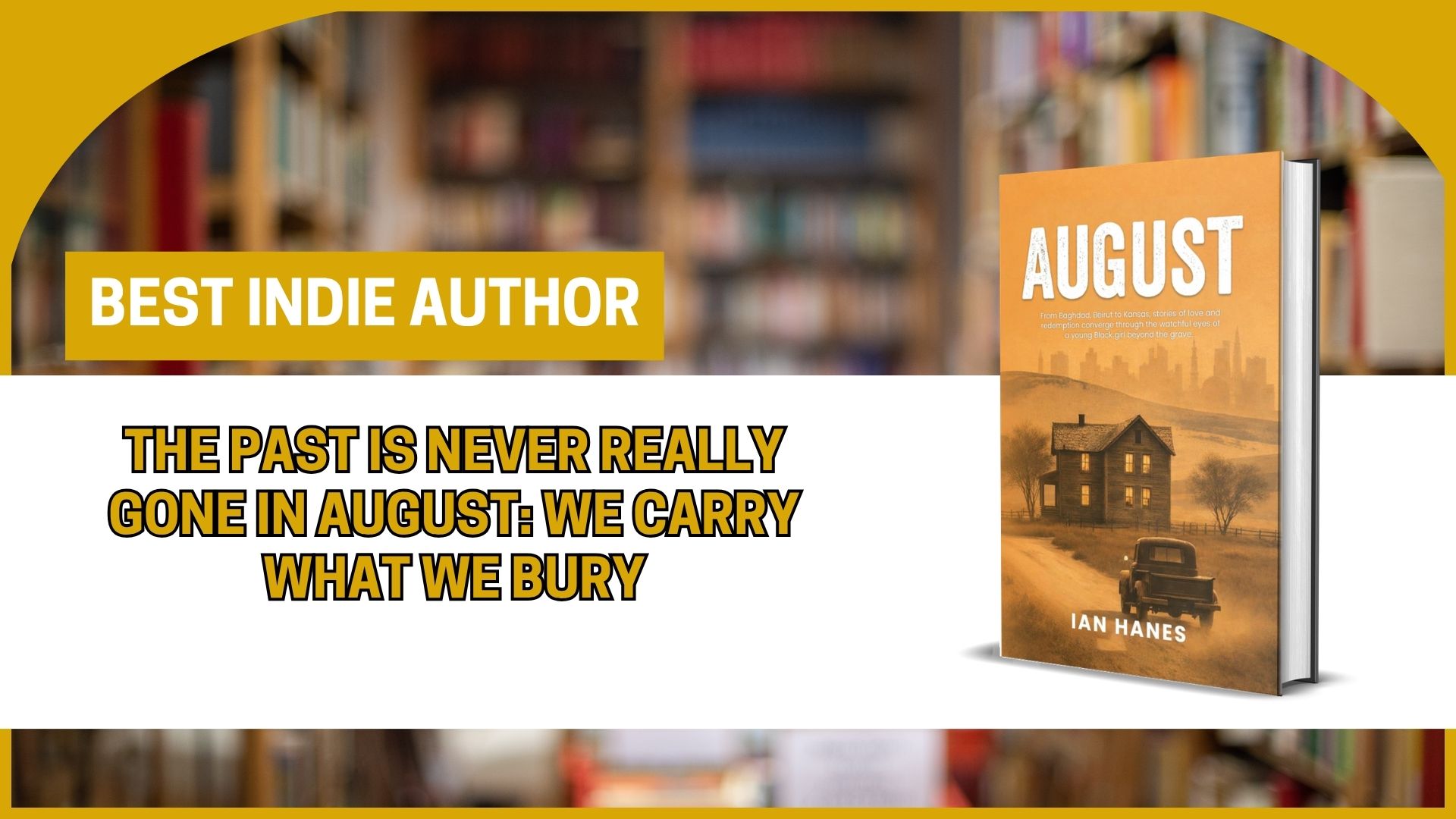
That idea runs through Ian Hanes’s August: We Carry What We Bury, a novel in which personal memory and larger history constantly overlap.
At the center of the story is August Harper, a young basketball star growing up in Lebanon, Kansas, during the 1970s. He has talent, a future and the possibility of earning a scholarship to the University of Kansas. He also has Rose Rosalind, a Black teenage girl whose dreams are every bit as ambitious as his own.
Rose wants to become a civil rights lawyer. She wants to make her world better. August encourages her to think even bigger. Their relationship grows in quiet moments after basketball practice, in conversations about the future and in the simple intimacy of holding hands when no one else is around.
Then one night changes everything.
While trying to reach August’s championship basketball game, Rose is struck by a car and killed. August wins the game that should have launched him toward a new life, but when he discovers that Rose is gone, victory loses its meaning. College scouts later arrive with opportunities, yet he turns them away.
August remains in Kansas.
He farms. He grows older. Eventually, he raises his son, John. But Rose never truly disappears from his life.
He visits her unmarked grave through the years, sometimes in the morning, sometimes at sunset, sometimes in winter. He says nothing. He simply stands there.
That quiet ritual captures one of the novel’s most powerful ideas: grief does not always announce itself. Sometimes it becomes part of a person’s identity. It settles into daily routines, influences decisions and stays present even when nobody else knows it is there.
But Ian Hanes takes this idea beyond August’s private loss.
Throughout the novel, history itself behaves in much the same way. The narrative reaches across places and generations, exploring racial injustice, slavery, war, migration, political power, the COVID-19 pandemic and the Beirut port explosion. Again and again, events from the past affect people who were not there when they began.
The novel repeatedly asks: What happens when societies fail to remember?
People inherit consequences just as families inherit memories.
That generational thread becomes especially important through John. Long after Rose’s death, he discovers more about the woman whose absence quietly shaped his father. At Rose’s grave, the hidden story finally becomes visible. John understands who she was and Rose, who has watched the story continue after her death, finally reaches peace.
The past cannot be undone in August: We Carry What We Bury.
But it can be remembered.
It can be understood.
And perhaps, when the truth finally rises to the surface, it can stop being carried alone.
Ian Hanes’s novel is a moving reminder that what came before us is never entirely gone. It survives in stories, places, families, choices and the people we refuse to forget.
Discover August: We Carry What We Bury by Ian Hanes, available now on Amazon: https://www.amazon.com/dp/B0H3M2GCJJ/