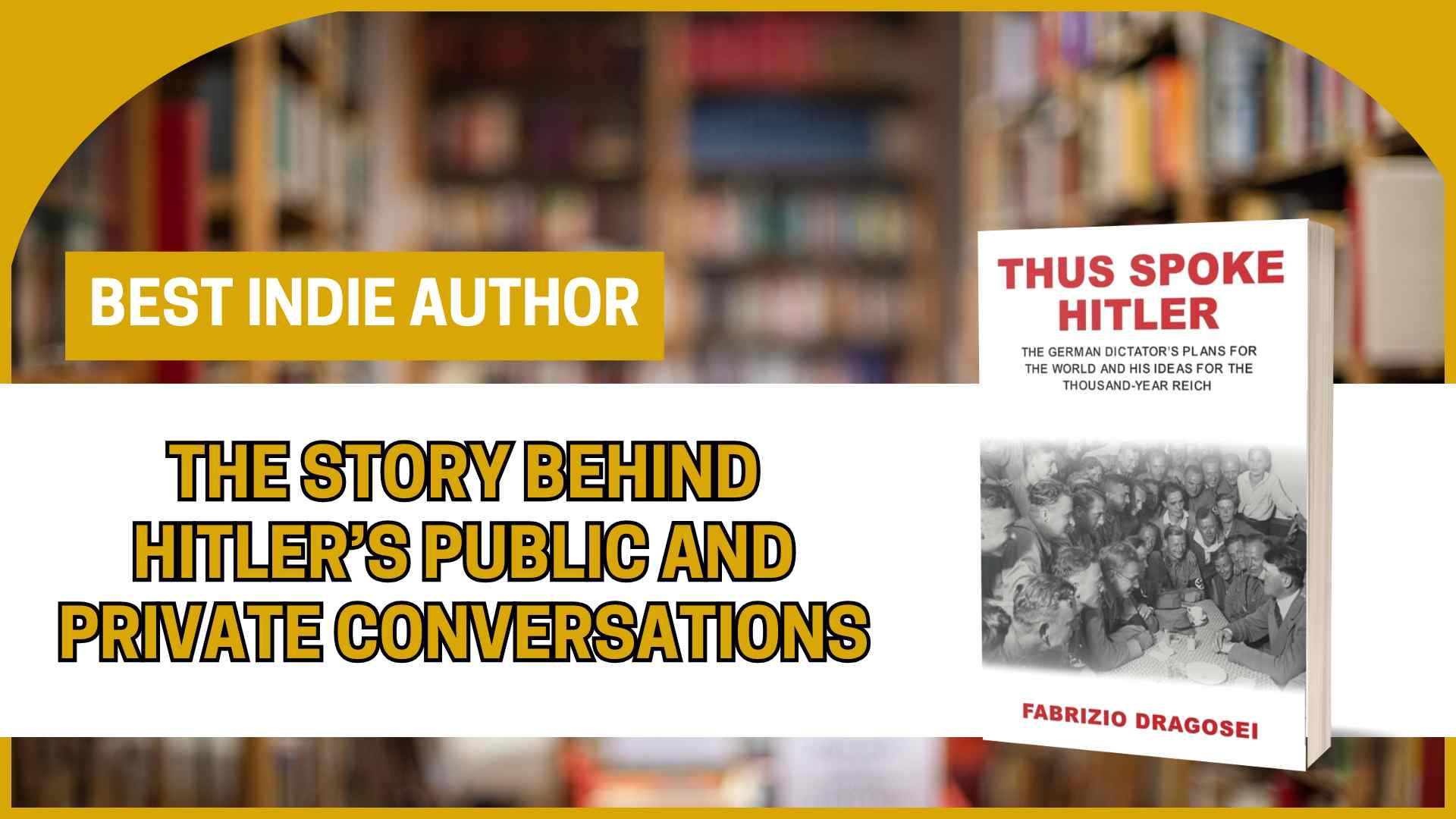
History is shaped not only by battles and political decisions but also by the words that influence them. Public speeches can inspire, persuade or manipulate millions, while private conversations often reveal the thinking behind those public messages. In Thus spoke Hitler, author Fabrizio Dragosei brings these two worlds together, offering readers a carefully researched examination of Adolf Hitler’s documented speeches, conversations, military conferences and writings within their historical context.
Unlike many books that focus solely on major events of World War II, Thus spoke Hitler explores how Hitler communicated throughout his rise to power, his leadership during the war and the final years of the Third Reich. By combining his public addresses with documented private discussions and official records, the book provides readers with a broader understanding of the ideas, strategies and decisions that shaped one of history’s most destructive regimes.
Public speeches were among Hitler’s most influential political tools. They were designed to persuade audiences, strengthen support for Nazi policies and reinforce the ideology of the regime. These speeches helped shape public opinion during a period of enormous political and social upheaval. However, public rhetoric alone does not tell the entire story.
Private conversations and military conferences offer another perspective. They reveal how political goals were discussed behind closed doors, how strategic decisions evolved and how the realities of war influenced leadership. While these records should always be understood within their historical setting, they provide valuable insight into the inner workings of Nazi Germany and the decision-making processes that affected millions of lives.
What distinguishes Thus spoke Hitler is the way Fabrizio Dragosei presents these historical materials. Rather than compiling quotations without explanation, he carefully places every statement within the events surrounding it. Readers are guided through the historical circumstances, allowing them to understand not only what was said but also why it mattered at that particular moment in history.
Dragosei’s meticulous research draws from speeches, archival documents, official records and wartime materials, creating a resource grounded in primary historical evidence. This evidence-based approach encourages readers to move beyond simplified narratives and engage directly with the documented record. The result is a deeper appreciation of how language, ideology and political decisions interacted during one of the twentieth century’s defining periods.
The book also serves as a reminder of the immense power of communication. Words can unite people around worthy causes, but they can also be used to spread hatred, justify aggression and undermine democratic institutions. Studying Hitler’s public and private statements within their historical framework helps readers recognize how propaganda and political messaging can shape societies and why critical thinking remains essential today.
Whether you are a student of history, an educator, a researcher or simply someone interested in understanding World War II from a document-based perspective, Thus spoke Hitler offers an engaging and thought-provoking reading experience. It is not intended to glorify its subject but to examine, through authentic historical sources, how rhetoric and leadership contributed to one of history’s greatest tragedies.
For anyone seeking a deeper, evidence-based understanding of Nazi Germany, Thus spoke Hitler by Fabrizio Dragosei is an invaluable addition to the bookshelf. By bringing together Hitler’s public speeches and documented private conversations with careful historical analysis, the book provides readers with a richer perspective on the past and reinforces the importance of learning from it.