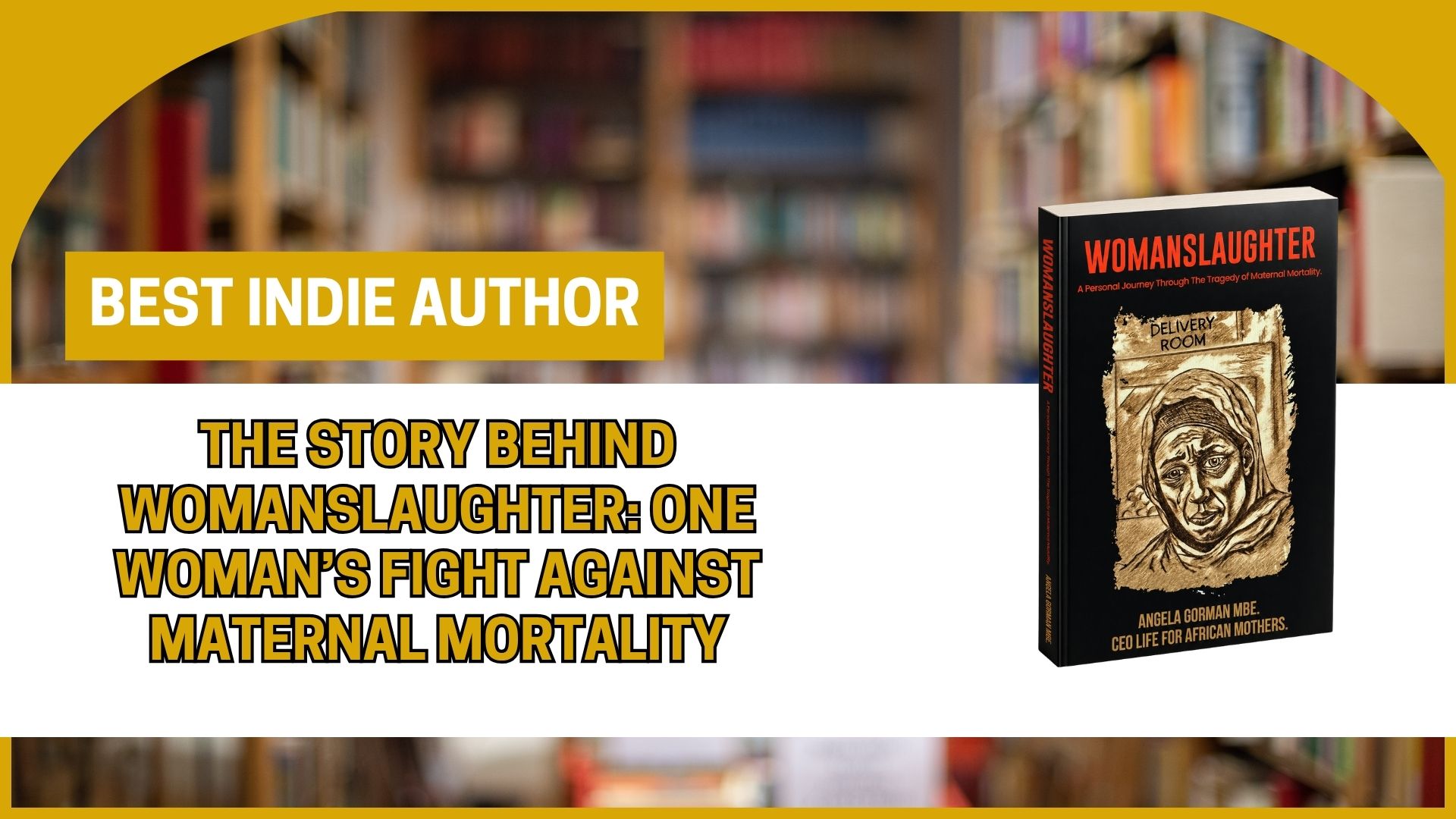
Some books begin with an idea. Others begin with an experience so powerful that it changes the direction of a person’s life. For Angela Gorman, MBE, the story behind WOMANSLAUGHTER: A Personal Journey Through The Tragedy of Maternal Mortality began on an ordinary evening in June 2005, when a television programme exposed her to a reality she could no longer ignore.
At the time, Gorman was 57 and working as a senior neonatal intensive care nurse in Cardiff. After an exhausting shift, she was preparing to turn off the television when the BBC Panorama documentary Dead Mums Don’t Cry began. The programme followed Dr. Grace Kodindo in Chad and showed women and girls dying from complications of pregnancy and childbirth, often because medicines and resources commonly available in wealthier countries were simply unavailable.
Instead of watching, feeling saddened and moving on, Gorman did something.
That night, she opened her laptop and wrote an email asking how she could help. It became, as she describes it, the email that changed her life. What followed was the beginning of a humanitarian journey that would eventually take her far beyond Cardiff and into hospitals and communities across Africa.
From Concern to Action
Gorman initially believed the answer might be relatively simple: provide medicines to one hospital in Chad. Her UNISON Health Branch pledged £5,000, donations followed and contact was established with International Health Partners to help supply urgently needed medications.
Then Gorman travelled to Chad.
What she witnessed transformed statistics into people. Hospitals faced shortages of medication, equipment and even basic supplies. In one maternity facility, midwives had to work under conditions that would be almost unimaginable in the UK. Yet Gorman also saw how quickly the right intervention could change an outcome.
During her first visit, donated antibiotics reached a woman suffering from a dangerous infection after an unsafe abortion. Because the medication was available free of charge, she could receive the full treatment she needed. For Gorman, seeing that mother survive demonstrated something fundamental: relatively modest resources could stand between life and death.
A Mission That Became Personal
The work developed into Life for African Mothers and Gorman’s involvement expanded across multiple countries. Over approximately 20 years, she records that the organisation supplied more than six million Misoprostol tablets to parts or all of seven countries, helping provide medication free of charge to around two million women.
But one of the most powerful discoveries came much closer to home.
Gorman’s paternal grandmother, Hannah Granville, died in 1915 when Gorman’s father was still a young child. Decades later, Angela obtained Hannah’s death certificate and discovered that one of the recorded causes was catastrophic postpartum haemorrhage, the very complication she had spent years helping women survive.
Suddenly, the fight against maternal mortality was not only professional or humanitarian. It was part of her own family history.
More Than a Memoir
WOMANSLAUGHTER documents hospitals, journeys, setbacks, remarkable people, lifesaving interventions and moments of profound frustration. It also asks an uncomfortable question: why are preventable maternal deaths still tolerated?
Gorman repeatedly challenges audiences to imagine the global reaction if hundreds of thousands of men were dying annually from preventable causes.
That question sits at the heart of the book.
WOMANSLAUGHTER: A Personal Journey Through The Tragedy of Maternal Mortality is ultimately a story about refusing to look away. Angela Gorman’s journey shows how compassion can become action and how one person’s decision to respond can reach far beyond anything they originally imagined.
Discover Angela Gorman, MBE’s extraordinary journey in WOMANSLAUGHTER: https://www.amazon.com/dp/B0H8FKFQBZ