History remembers some people loudly.
Their names appear in books, monuments, speeches and photographs. Their victories are preserved. Their failures are debated. Their lives are documented.
Others are remembered only in fragments.
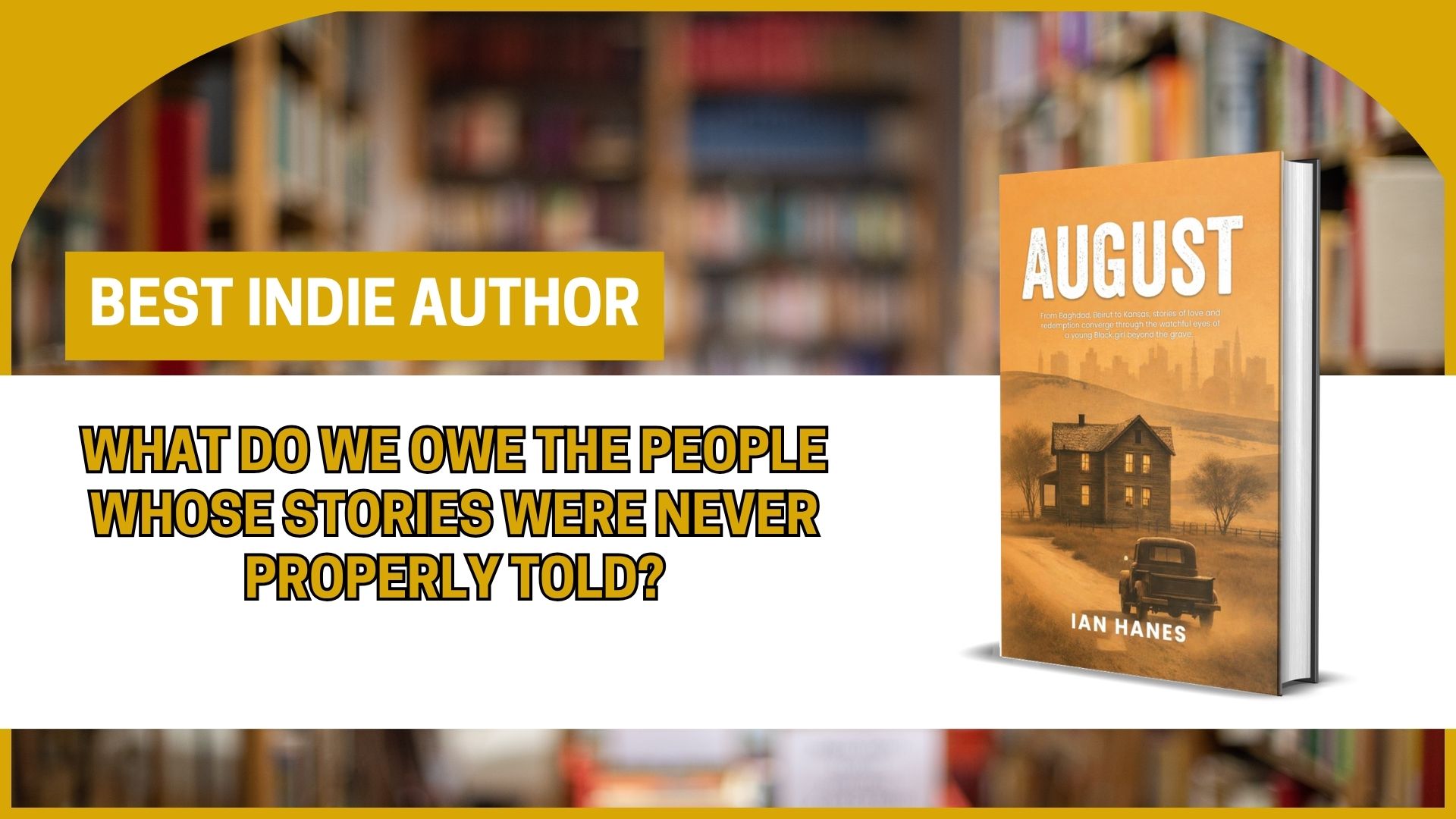
Ian Hanes’s August: We Carry What We Bury is deeply interested in those quieter lives the people whose stories were overlooked, misunderstood, reduced to gossip or never properly told at all.
Rose is one of them.
Rosalind is a Black teenager living in Kansas in the 1970s. She is intelligent, funny, observant and ambitious. She dreams of becoming a civil rights lawyer and perhaps entering politics. She imagines herself changing the world around her instead of simply accepting it. In her private conversations with August Harper, readers see a young woman with ideas, confidence and a future she is eager to pursue.
Then that future is taken from her.
Rose is killed while trying to reach August’s championship basketball game. In the immediate aftermath, the way people speak about her is painfully revealing. News of her death circulates through the celebration almost as an afterthought, while attention remains fixed on the game, the driver and the consequences for everyone else.
Even her grave remains unmarked.
Yet Rose refuses to disappear from the story.
Because she narrates much of the novel from beyond death, readers are allowed to know the person that history might otherwise have reduced to a tragedy. We hear her humor. We see her hopes. We understand her love for August. We witness her frustration with prejudice and her fascination with the changing world.
That narrative choice transforms an important question into something deeply personal:
Who gets remembered as a complete human being?
Throughout August, Ian Hanes expands that question beyond Rose. The novel moves through histories of racial injustice, slavery, war, migration, political power, pandemics and catastrophe. Again and again, it draws attention to ordinary people living inside events that later become statistics, headlines or historical summaries.
One particularly striking section remembers an enslaved woman whose name is not preserved by those who profit from her suffering. She dies before reaching America and is thrown into the sea without ceremony. Yet within Rose’s narration, her story is heard and carried forward.
That idea echoes the novel’s title.
We carry what we bury.
Sometimes what we carry is personal grief. Sometimes it is inherited history. And sometimes it is the responsibility to remember people who were denied the chance to tell their own stories.
By the end of the novel, John finally discovers Rose’s identity and understands more about the woman whose life shaped his father’s. He kneels at her grave, reads her name and acknowledges that he now knows who she was. For Rose, that recognition brings peace.
Perhaps that is one answer to what we owe the forgotten.
We owe them more than a date.
More than a statistic.
More than a passing mention.
We owe them curiosity, dignity, memory and whenever possible, their names.
August: We Carry What We Bury reminds us that telling someone’s story cannot undo what happened to them.
But it can refuse to let them disappear.
Discover August: We Carry What We Bury by Ian Hanes, available now on Amazon: https://www.amazon.com/dp/B0H3M2GCJJ/