Imagine arriving at work knowing that every task you complete, every break you take, every email you send and every decision you make is being monitored, measured and evaluated not by a manager, but by an algorithm.
For millions of workers, this is no longer a hypothetical scenario.
As Artificial Intelligence becomes deeply embedded in workplaces, organizations are increasingly using algorithms to assign tasks, track productivity, monitor performance, optimize schedules and even influence hiring and promotion decisions. These technologies promise greater efficiency and consistency. But they also raise an important question:
What happens when employees begin to feel managed by machines instead of people?
The answer may be one of the most overlooked challenges in the modern workplace.
The Rise of Algorithmic Management
AI-driven management systems are becoming common across industries. Warehouses use intelligent software to measure productivity in real time. Gig economy platforms rely on algorithms to allocate work and evaluate performance. Customer service centers use AI to track call metrics, response times and employee engagement.
From a business perspective, these systems offer clear advantages. They can process enormous amounts of data, identify patterns and make decisions faster than human managers.
However, efficiency is only one part of the story.
Employees do not experience AI as a dashboard or software application. They experience it as part of their daily work environment. And when technology begins to dictate pace, priorities and performance expectations, the psychological effects can be significant.
When Trust Begins to Erode
One of the greatest risks of algorithmic management is the loss of trust.
Employees often understand how a human manager makes decisions. They can ask questions, seek clarification and engage in dialogue. Algorithms rarely offer the same transparency.
When workers don’t understand why a decision was made or feel they have no voice in the process, they may begin to view the system as unfair or impersonal.
This can lead to frustration, disengagement and skepticism toward leadership.
Ironically, organizations that implement AI to improve performance may unintentionally weaken the very workplace culture that drives long-term success.
The Human Cost of Constant Monitoring
Another consequence is increased psychological strain.
Many AI systems are designed to measure productivity continuously. While this can improve accountability, it can also create an environment where employees feel perpetually observed.
Over time, constant monitoring can contribute to stress, anxiety, burnout and reduced job satisfaction. Workers may become more focused on meeting algorithmic targets than exercising judgment, creativity or collaboration.
When employees feel they are working for a machine rather than alongside supportive leadership, motivation often suffers.
Why This Matters More Than Ever
The future of work will undoubtedly include AI. The question is not whether organizations should adopt these technologies, but how they should adopt them.
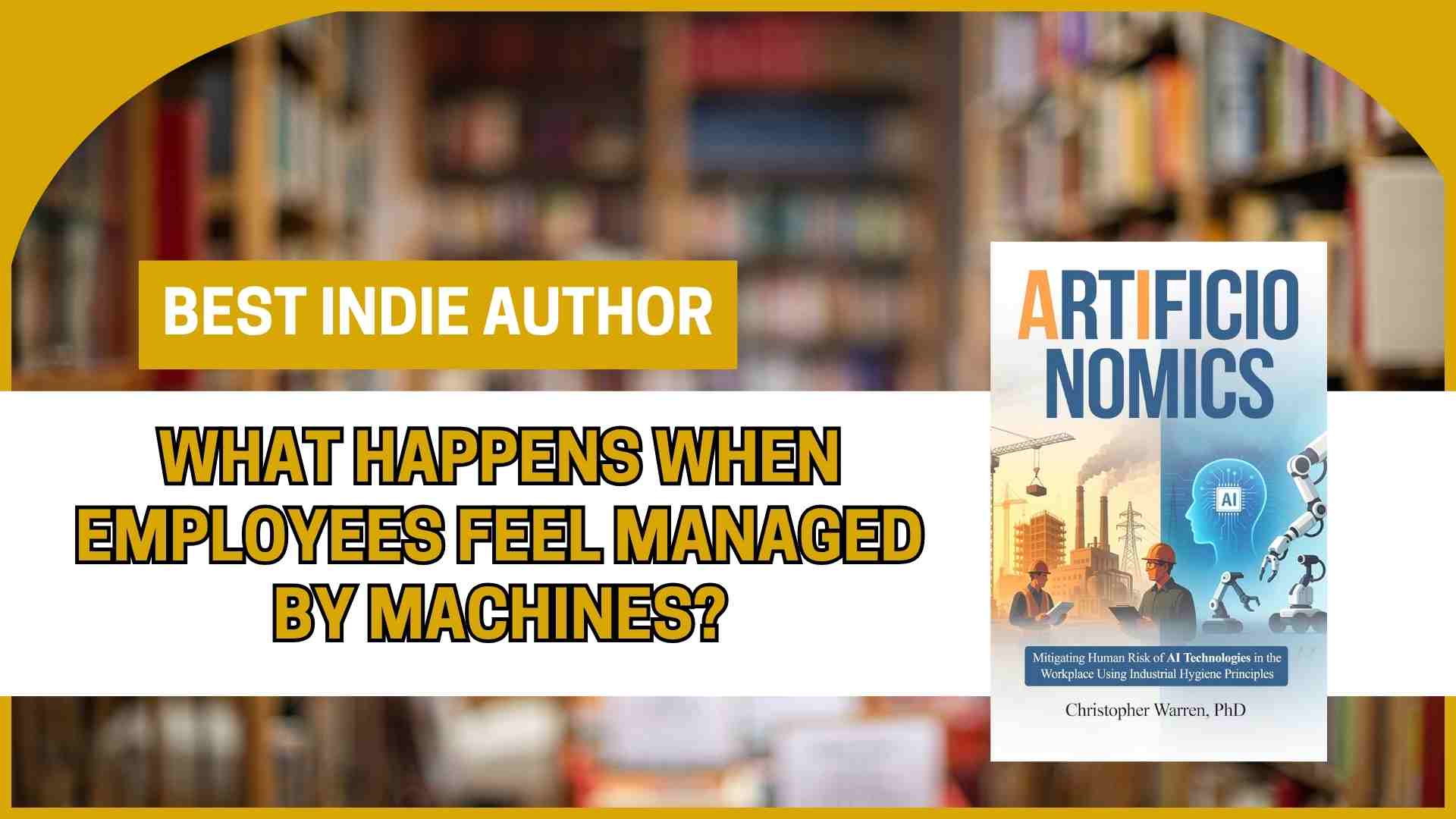
This challenge is at the center of Artificionomics: Mitigating Human Risk of AI Technologies in the Workplace Using Industrial Hygiene Principles by Christopher Warren, PhD.
In the book, Warren introduces Artificionomics, a groundbreaking framework that examines the human impact of AI and robotics in the workplace. Rather than focusing solely on productivity and automation, Artificionomics applies industrial hygiene principles to identify, evaluate and control the psychological, social, ethical and physical risks associated with intelligent technologies.
The framework encourages organizations to ask a critical question:
How does AI affect the people who use it?
Building a Human-Centered Future
The most successful organizations of the future will not be those that simply deploy the most advanced AI systems.
They will be the ones that balance innovation with empathy, automation with transparency and technology with trust.
Employees want tools that help them succeed, not systems that make them feel replaceable, monitored or powerless.
As AI continues to transform the workplace, leaders must remember a simple truth: people perform best when they feel respected, valued and understood.
Technology may manage processes.
But great organizations never stop managing people like humans.