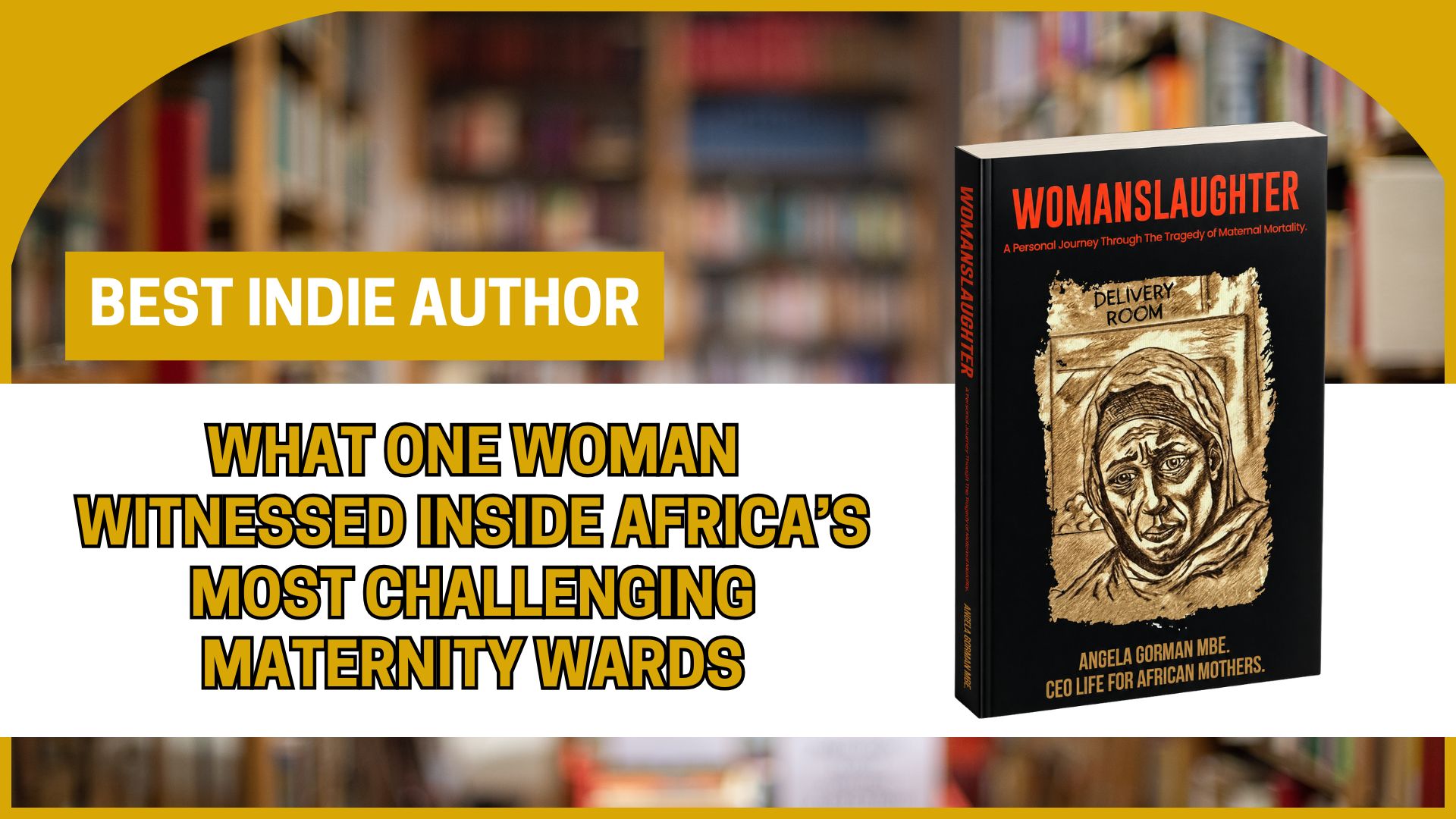
Most people enter a maternity ward expecting it to be a place of safety, skilled care and new beginnings. For Angela Gorman, MBE, visiting maternity units across Africa revealed a far more difficult reality one in which mothers and babies often faced life-threatening risks because hospitals lacked the most basic resources.
In WOMANSLAUGHTER: A Personal Journey Through The Tragedy of Maternal Mortality, Angela takes readers inside these wards and shares what she witnessed during two decades of humanitarian work. Her account is not written from a distance. As a retired senior neonatal intensive care nurse, she understood exactly what should have been available and what could happen when essential treatment was missing.
Her journey began after she watched the BBC Panorama documentary Dead Mums Don’t Cry in 2005. The programme showed pregnant women dying in Chad from conditions that could often be treated with readily available medication. Angela was deeply affected and wrote an email that same night, beginning a mission that would change her life.
When she later travelled to Chad, the conditions she encountered were even more disturbing than television could convey. In one maternity facility, women laboured in near darkness because the hospital had no reliable electricity. A kerosene lamp provided the only light in one room, while four women in advanced labour were cared for by a single midwife using carrier bags as makeshift gloves.
Angela also saw newborn babies placed on cold surfaces after birth and washed under cold water rather than being immediately warmed and given to their mothers. She discovered that some of these practices had been introduced because local healthcare workers believed they reflected Western methods. The experience forced Angela and her colleagues to recognise that outside advice, even when well-intentioned, could cause harm when it was outdated or imposed without sufficient understanding.
The shortages went far beyond equipment. In some hospitals, families were required to purchase medication, needles, fluids and surgical supplies before treatment could begin. Women facing severe haemorrhage or eclampsia could die while relatives searched for money. Midwives and doctors often knew exactly what their patients needed but were unable to provide it.
Yet WOMANSLAUGHTER also highlights extraordinary courage. Angela met healthcare professionals who continued reporting for duty despite low pay, dangerous conditions, exhaustion, civil conflict and disease outbreaks. Some worked without gloves, oxygen, dependable power or adequate staffing, yet remained committed to saving every life they could.
Her work helped turn compassion into practical support. Medication sent to a hospital in Chad was reported to have reduced maternal deaths dramatically, while the newborn mortality rate reportedly dropped from 23 percent to 7 percent. Over time, Life for African Mothers supplied more than six million Misoprostol tablets, with approximately two million women receiving the medication free of charge.
What Angela witnessed was heartbreaking, but her book is not without hope. It shows that lives can be saved when healthcare workers receive medication, training, equipment and meaningful support.
WOMANSLAUGHTER gives readers a rare look inside maternity wards where childbirth can still become a fight for survival. More importantly, it honours the mothers, babies, midwives and doctors whose experiences should never be ignored.