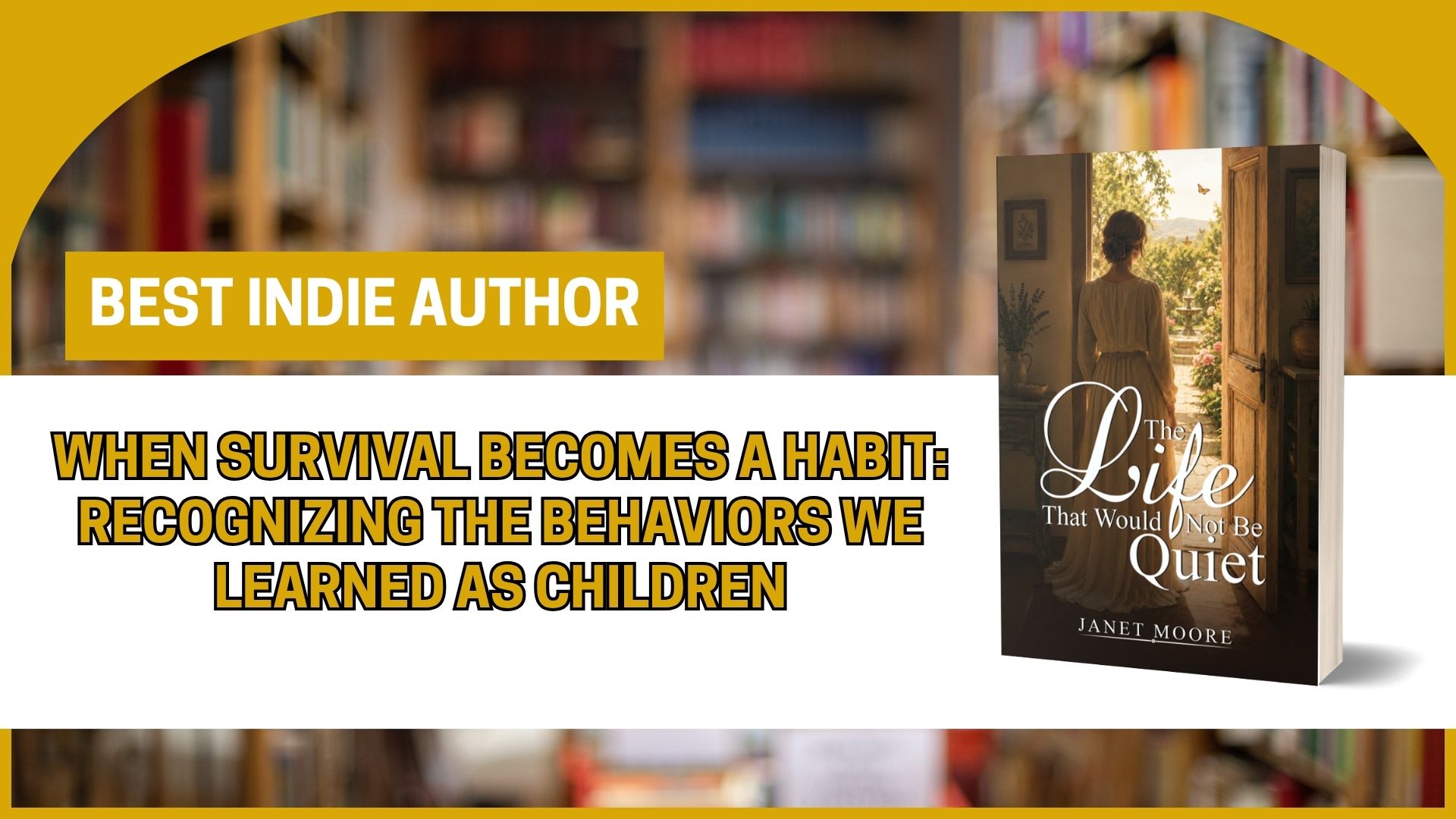
The ways we respond to life often begin long before we understand why we respond that way. The habits we develop as children can become the strategies we carry into adulthood, shaping how we handle relationships, challenges, and our own emotions. In The Life That Would Not Be Quiet, Janet Moore shares a deeply personal journey of discovering how childhood experiences influenced the choices she made and the patterns she repeated.
As children, we learn what we need to survive our environment. Some learn to stay quiet to avoid conflict. Some learn to be responsible for everyone else’s feelings. Some learn to seek approval, hide their needs, or become invisible when life feels uncertain. These responses can serve a purpose during difficult moments, but they can become limiting when carried into adulthood.
Janet’s story reveals how survival can become so familiar that we mistake it for identity. The behaviors that once protected us may later prevent us from experiencing the connection, confidence, and freedom we desire. Recognizing these patterns is the first step toward understanding ourselves with greater compassion and honesty.
Through her own experiences, Janet explores the connection between childhood wounds and adult relationships. She reflects on the moments when she realized that the choices she made were not random, but connected to lessons learned early in life. Understanding those connections allowed her to see her story from a new perspective and begin changing the direction of her life.
The Life That Would Not Be Quiet is a powerful reflection on the process of looking beneath the surface of our actions and asking important questions. Why do we accept certain situations? Why do we struggle to speak up? Why do we continue patterns that no longer serve us?
Janet Moore’s memoir offers insight for anyone who has felt trapped by familiar behaviors or wondered why certain struggles continue to appear. It is a reminder that the past may influence us, but it does not have to control us.
Healing begins when we recognize the difference between who we became to survive and who we truly want to become. By understanding the patterns formed in childhood, we can create new ways of living, loving, and connecting.
The Life That Would Not Be Quiet invites readers to examine their own stories, uncover the beliefs they have carried for years, and discover that change is possible at any stage of life.