Survival mode is useful when something is wrong. It keeps you alert, cautious, and ready to respond. The problem begins when the danger is gone but your body and mind continue behaving as though it is still nearby.
For someone who has lived through a toxic or abusive relationship, survival can become part of everyday life.
You learn to watch facial expressions carefully. You notice changes in tone. You think before speaking because the wrong sentence once carried consequences. You prepare for arguments that have not happened. Even in a quiet room, part of you may still be waiting for the atmosphere to change.
After enough time, this can feel normal.
You may stop noticing how tense your shoulders are or how often you rehearse conversations before having them. You may become uncomfortable when someone treats you gently because kindness does not match the patterns you learned to expect. Peace can even feel suspicious.
Survival mode can also hide behind competence.
Some people become exceptionally good at functioning during emergencies. They work, solve problems, care for others, manage responsibilities, and appear completely in control. Their ability to keep moving can make it difficult for anyone to see how exhausted they really are.
Eventually, however, constantly preparing for the next problem leaves little room for simply living.
Healing often begins when a person recognizes that safety and alertness are not the same thing. Being safe means having boundaries that are respected. It means being able to say no without punishment. It means making mistakes without fearing retaliation. It means trusting that another person’s kindness does not carry a hidden price.
Learning this can take time because survival habits were built for a reason.
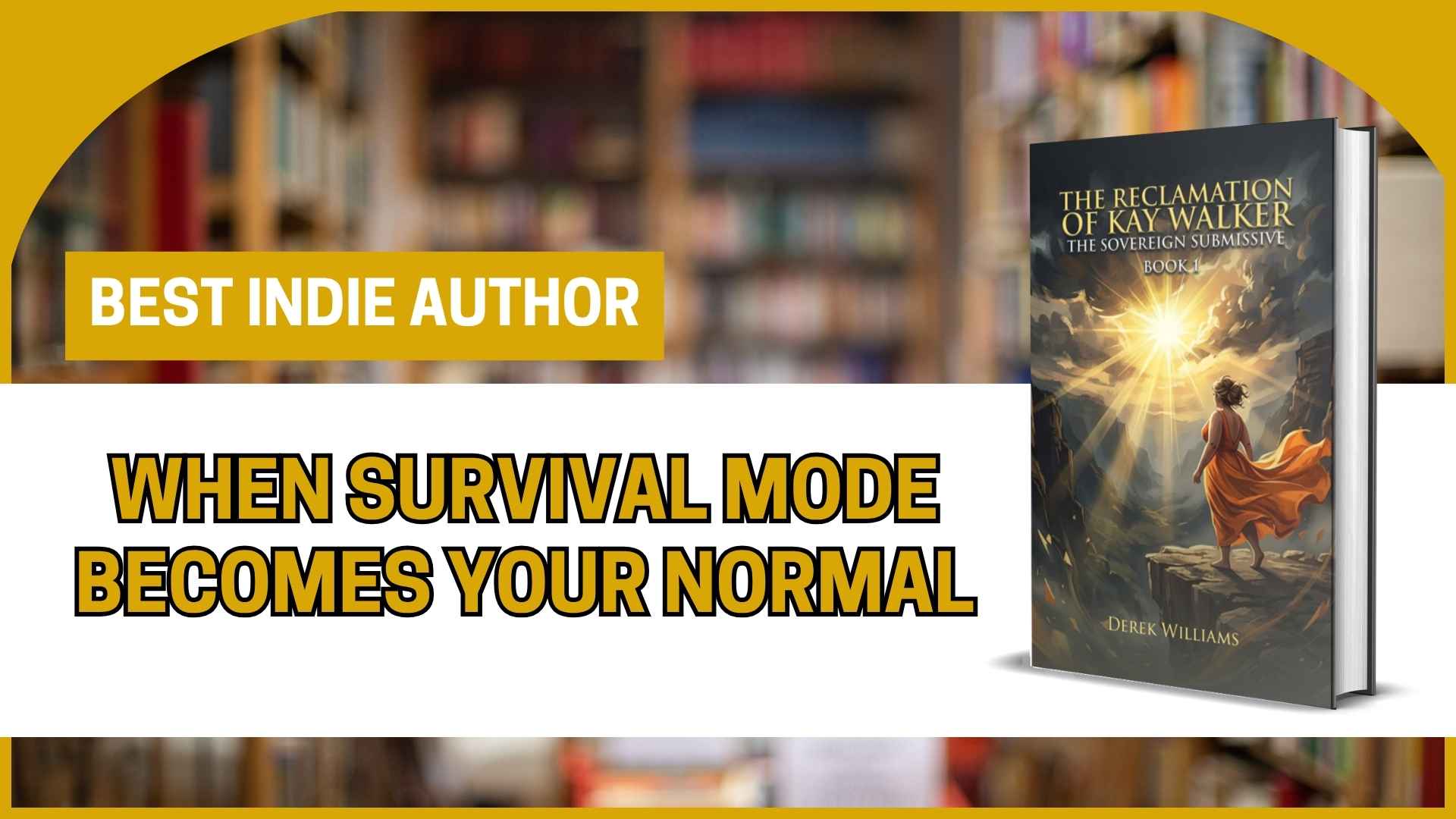
This struggle shapes Kay Walker’s journey in Derek Williams’s The Reclamation of Kay Walker, Book One of The Sovereign Submissive series.
Kay is an experienced EMT. In an emergency, she knows exactly what to do. She can assess a crisis, make decisions, and remain focused while everyone around her is frightened. Yet outside her uniform, she is still carrying the emotional damage of an abusive marriage.
She has escaped the relationship, but she has not escaped the expectation that something bad is always coming.
As Kay begins exploring consensual BDSM and develops relationships built around communication and trust, she faces an unfamiliar challenge. She must learn that surrender does not always mean danger. Control can be willingly shared. Vulnerability can exist without punishment. Someone can hold power and still respect the person who has trusted them with it.
The Reclamation of Kay Walker follows a woman moving beyond the life she learned to survive and beginning to discover one she actually wants to live.
Survival may keep someone alive.
But eventually, healing asks a different question: What happens when you no longer have to be afraid?