Decades after the triumph of the Cuban Revolution, few political figures continue to provoke as much international discussion as Fidel Castro. To supporters, he represented resistance, sovereignty and revolutionary determination. To critics, he symbolized authoritarianism and ideological rigidity. Yet regardless of political perspective, one reality remains undeniable: Fidel Castro still shapes political debate today.
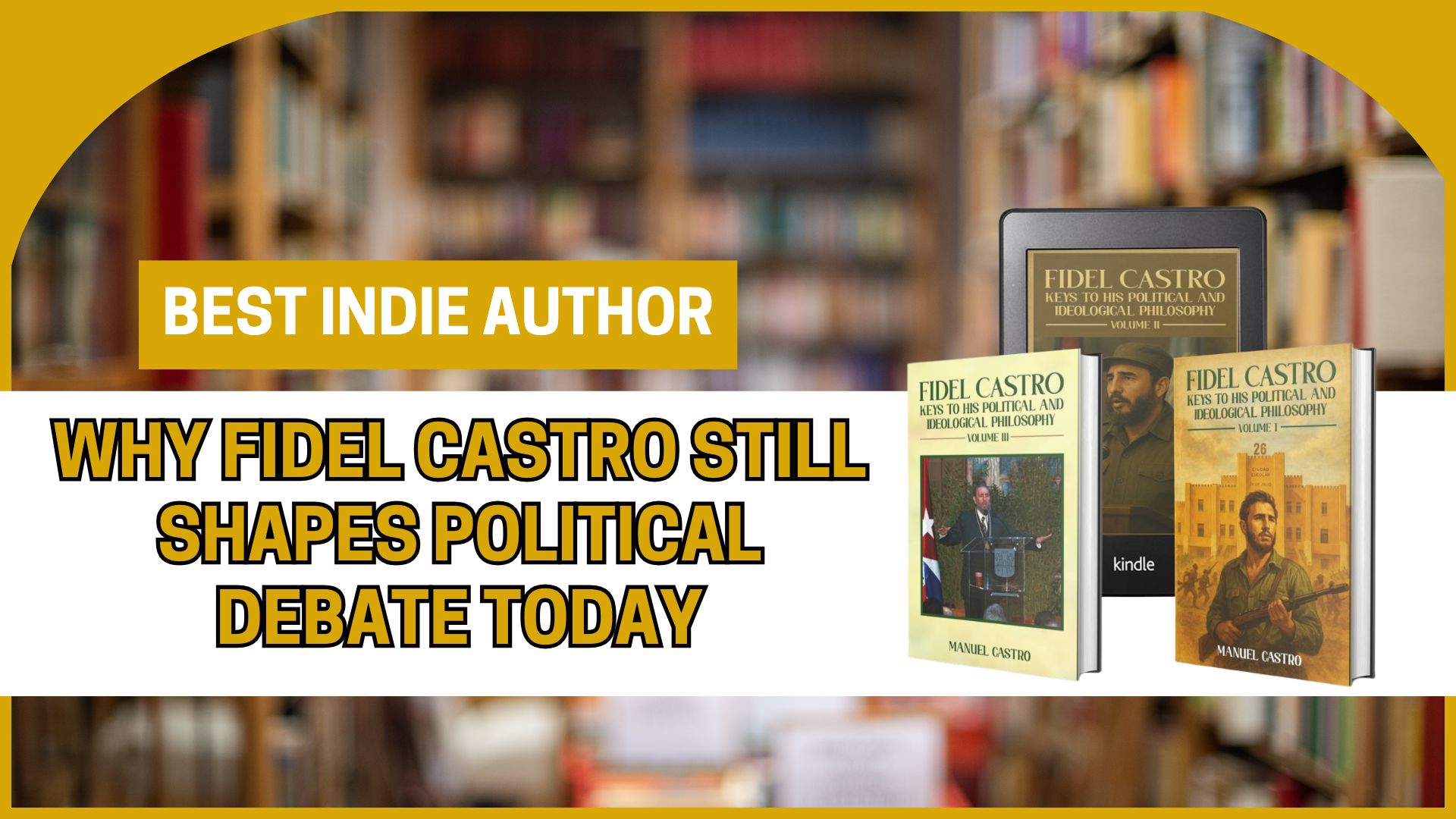
His speeches, policies, strategies and revolutionary philosophy continue to influence conversations about socialism, nationalism, imperialism, inequality, leadership, media, education and global power structures. This enduring relevance is explored extensively in Fidel Castro: Keys to His Political and Ideological Philosophy (Volume I), Fidel Castro: Keys to His Political and Ideological Philosophy (Volume II) and Fidel Castro: Keys to His Political and Ideological Philosophy (Volume III) by Manuel A. Castro.
Far more than a historical biography, this ambitious trilogy examines Fidel Castro as a political strategist, ideological architect and global revolutionary thinker. Through hundreds of thematic concepts and carefully documented speeches, Manuel Castro presents a detailed analysis of the ideas that defined Fidel’s leadership and helped shape modern political discourse.
One reason Fidel Castro remains central to political debate is his uncompromising stance on sovereignty and foreign influence. Throughout his leadership, Castro consistently argued that smaller nations must resist domination by powerful global interests. In today’s political climate, where debates about globalization, economic dependency, sanctions and national identity remain highly relevant, these themes continue to resonate across multiple regions of the world.
The trilogy demonstrates how Fidel framed political independence not simply as a governmental issue, but as a cultural and ideological struggle. He believed that nations could not truly achieve freedom without controlling their economic direction, educational systems and political narratives. Readers will find that many of the concerns Castro raised decades ago continue to appear in modern discussions about international relations and geopolitical power.
Another reason Fidel’s legacy persists is his mastery of political communication. Few leaders in modern history used speeches as effectively as Castro did. His public addresses were designed not only to persuade but to educate and mobilize entire populations. Manuel Castro’s books explore how Fidel blended history, philosophy, economics and revolutionary rhetoric into a style of communication that shaped public consciousness for generations.
In an age dominated by rapid social media messaging and short political sound bites, Fidel’s long-form political oratory stands in striking contrast. The trilogy reveals how he used language to create unity, reinforce ideological commitment and maintain political momentum even during periods of crisis and international pressure.
The books also explore Fidel Castro’s influence beyond Cuba. His anti-imperialist positions and support for liberation movements gave him a significant role in global Cold War politics, particularly throughout Latin America, Africa and the developing world. His ideas about inequality, colonialism, economic justice and global power imbalances still echo in contemporary political movements and academic debates.
What makes Fidel Castro: Keys to His Political and Ideological Philosophy especially compelling is its structure. Rather than offering a simplified portrait of Castro, the trilogy organizes his thought into extensive categories, including revolution, democracy, education, ethics, nationalism, media, culture, poverty, globalization and human rights. This allows readers to examine the complexity of his political worldview from multiple perspectives.
For students of history, political science, international relations and revolutionary theory, these volumes provide an extraordinary resource for understanding one of the twentieth century’s most influential and controversial leaders. They encourage readers to move beyond headlines and ideological assumptions to engage directly with the philosophical foundations behind Fidel Castro’s political strategy.
In a world still divided by debates over power, inequality, national identity and political systems, Fidel Castro’s ideas continue to inspire argument, reflection, admiration and criticism. Manuel Castro’s trilogy offers readers a rare opportunity to explore why his legacy remains impossible to ignore and why his voice still echoes through political debate today.