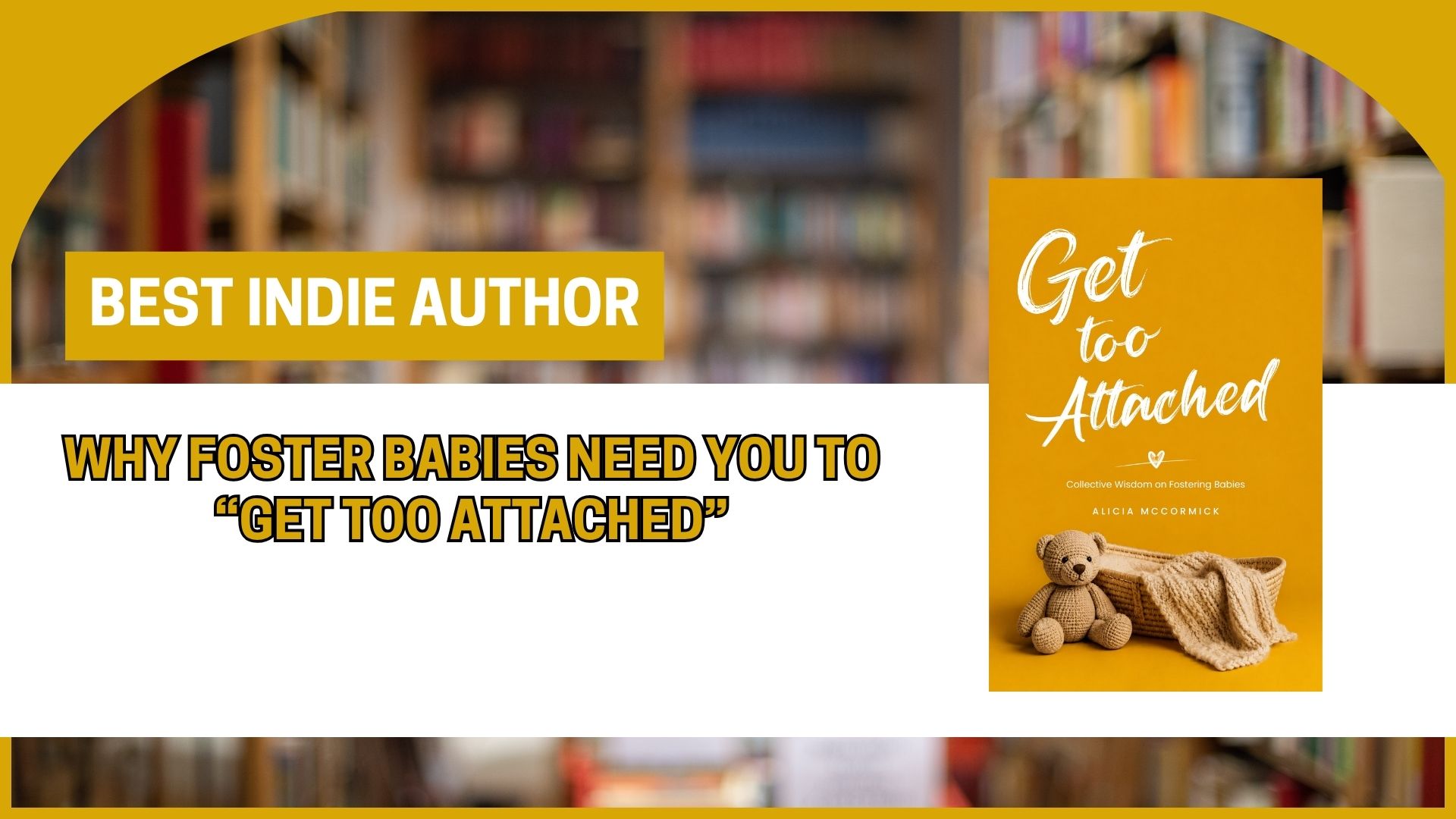
When people talk to foster parents, one phrase comes up again and again: “I could never do that. I’d get too attached.”
It sounds compassionate. After all, loving a baby deeply and then facing the possibility of reunification or another placement can be heartbreaking. But in her forthcoming book, Get Too Attached: Collective Wisdom on Fostering Babies, Alicia McCormick, PhD, challenges the idea that emotional distance somehow makes foster care easier or better.
For the baby, attachment is not the problem. It is part of the solution.
McCormick’s book brings together stories from foster parents who have cared for infants through prenatal substance exposure, neglect, medical complications, disrupted attachment, separation from biological parents and other forms of trauma. The book directly challenges the misconception that babies are too young to be affected by what happens to them. As McCormick explains, babies in foster care are not blank slates simply because they cannot verbally describe their experiences.
Trauma can appear in ways adults may not immediately recognize. Some babies struggle with feeding or sleeping. Others cry inconsolably, resist being held, experience withdrawal symptoms or appear unusually quiet and undemanding. Across the stories in Get Too Attached, foster parents describe learning to look beyond behavior and ask what a baby may be communicating through their body, routines and responses.
That is where attachment becomes so important.
Babies who have experienced instability need adults who respond consistently. They need to be held, comforted, fed, soothed, protected and shown again and again that someone will respond when they have a need. McCormick describes intentionally holding the babies in her care, responding rather than allowing them to simply “cry it out,” creating routines and helping them build a strong attachment to a caregiver.
And she brings extensive firsthand experience to the subject. McCormick has fostered 34 babies, including medically complex and substance-exposed newborns and she teaches foster-care workshops on caring for substance-exposed infants and developing and supporting attachment.
Still, Get Too Attached does not romanticize foster care.
Getting attached may mean grieving when a baby leaves. It may mean loving a child while simultaneously supporting reunification with a biological family. It may mean accepting that foster parents cannot control court decisions, timelines or whether a child remains in their home.
But the child should not have to receive less love simply because the adult is afraid of future pain.
McCormick captures this tension powerfully when she explains that foster parents are not people who remain emotionally detached while caring for children. Instead, they are willing to carry the hurt of saying goodbye if their love can reduce some of the hurt a child experiences.
That idea is at the heart of Get Too Attached.
The forthcoming book is for foster parents, prospective foster parents and anyone who wants to better support families caring for vulnerable babies. Through 30 foster-parent stories, it offers a candid look at trauma, attachment, reunification, advocacy, caregiving and the importance of community.
Perhaps the better question is not, “What if I get too attached?”
Perhaps it is: What does this baby need from me while I have the privilege of loving them?
Get Too Attached: Collective Wisdom on Fostering Babies by Alicia McCormick, PhD, will be available soon.