Modern life has brought remarkable progress. Technology has simplified tasks, increased access to information, and connected people across the world. Yet alongside these advancements, there is a growing sense of imbalance. Stress, anxiety, and mental fatigue have become common, even in environments designed for comfort and efficiency.
This contrast raises an important question. If life has become easier in many ways, why does it often feel more overwhelming?
Ancient traditions approached life with a different understanding. Balance was not something to achieve after success. It was the foundation of how life was lived. Daily routines were aligned with natural rhythms, and attention was given to the connection between body, mind, and inner awareness.
One of the clearest shifts is the pace of life. Ancient lifestyles followed cycles of nature, allowing periods of activity and rest to flow naturally. Today, the pace is constant. There is always something to do, something to respond to, and something to achieve. This continuous movement leaves little space for recovery, leading to exhaustion that goes beyond the physical level.
Another major difference lies in attention. Ancient practices encouraged focus and presence. Whether through meditation, mindful work, or simple observation, attention was directed toward one thing at a time. In contrast, modern life divides attention across multiple tasks and sources of information. This fragmentation weakens concentration and creates a persistent sense of mental strain.
The relationship with the body has also changed. Traditionally, movement was a natural part of daily life. Walking, working with the hands, and spending time outdoors supported physical and mental well-being. Today, long hours of inactivity and indoor living have disrupted this connection. The body becomes tense, energy slows, and the mind follows this imbalance.
Food and nourishment reflect a similar shift. Ancient systems emphasized eating in a way that supports both energy and clarity. Meals were often simple, timely, and connected to natural cycles. Modern habits tend to prioritize convenience, leading to irregular eating patterns and foods that place strain on the system rather than supporting it.
Perhaps the most significant loss is the connection with inner awareness. Ancient teachings placed great importance on self-observation and reflection. This allowed individuals to understand their thoughts, emotions, and patterns. In modern living, constant external stimulation leaves little room for this inward focus. Without it, imbalance grows unnoticed.
The result is a life that is full yet unsettled. There is achievement, but not always fulfillment. There is connection, but not always presence. There is activity, but not always clarity.
Restoring balance does not mean rejecting modern life. It means reintroducing the principles that were once naturally integrated. Slowing down when possible, creating moments of stillness, moving the body regularly, and becoming aware of inner patterns are simple yet powerful steps.
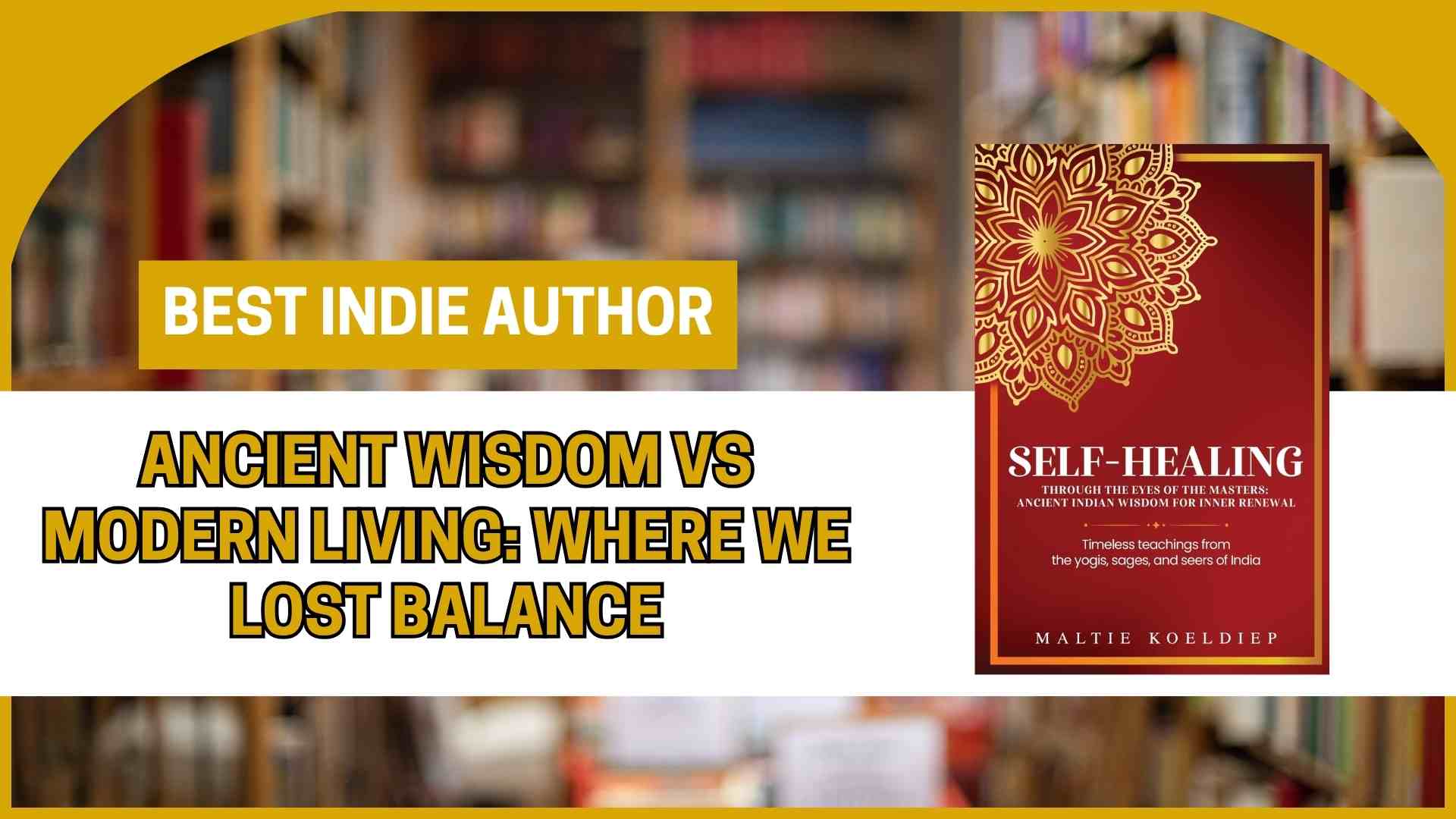
For those seeking a deeper understanding of how ancient insights can be applied to modern challenges, Self-Healing Through the Eyes of the Masters: Ancient Indian Wisdom for Inner Renewal by Maltie Koeldiep offers a thoughtful guide. The book brings together timeless teachings and presents them in a way that supports clarity, balance, and practical transformation. Progress has changed how we live. Ancient wisdom reminds us how to live well.
Read this book, available on Amazon: https://www.amazon.com/dp/1971228133/.