The images are familiar. Overcrowded boats, barbed wire borders, long lines of exhausted faces waiting for entry. Headlines reduce these moments to statistics, numbers that rise and fall with the news cycle. Yet behind every figure is a journey far more complex, far more dangerous, and far more human than most ever see.
For those forced to flee, the journey does not begin at the border. It begins with a decision that is rarely a choice. War, persecution, economic collapse, or political instability push individuals and families to leave everything behind. Homes, careers, communities, and identities are abandoned in exchange for uncertainty. What follows is not a straight path to safety, but a fragmented route shaped by risk at every turn.
The reality on the ground is far removed from policy debates. Smuggling networks operate where legal pathways fail. These networks do not offer protection. They offer passage at a price, often exploiting desperation. Refugees become commodities, moved across regions under harsh conditions with little regard for safety. The journey may involve long stretches on foot, overcrowded vehicles, or dangerous sea crossings where survival is never guaranteed.
Along the way, vulnerability increases. Families are separated. Resources run out. Trust becomes a gamble. Each step forward carries the risk of violence, exploitation, or betrayal. Even reaching a border does not mean the danger has passed. Detention, rejection, or prolonged uncertainty often follow, leaving individuals caught between the life they escaped and a future that remains unclear.
What is often missing from public conversation is the psychological toll. Fear becomes constant. Decisions are made under pressure, with limited information and even fewer options. Survival requires resilience, but it also demands compromise. People adapt in ways they never imagined, navigating moral and emotional challenges that cannot be captured in headlines.
At the same time, receiving nations struggle with their own pressures. Systems designed to process asylum claims are stretched. Political narratives shape public perception. The complexity of migration is simplified into arguments that rarely reflect the full picture. This disconnect between experience and perception fuels misunderstanding on all sides.
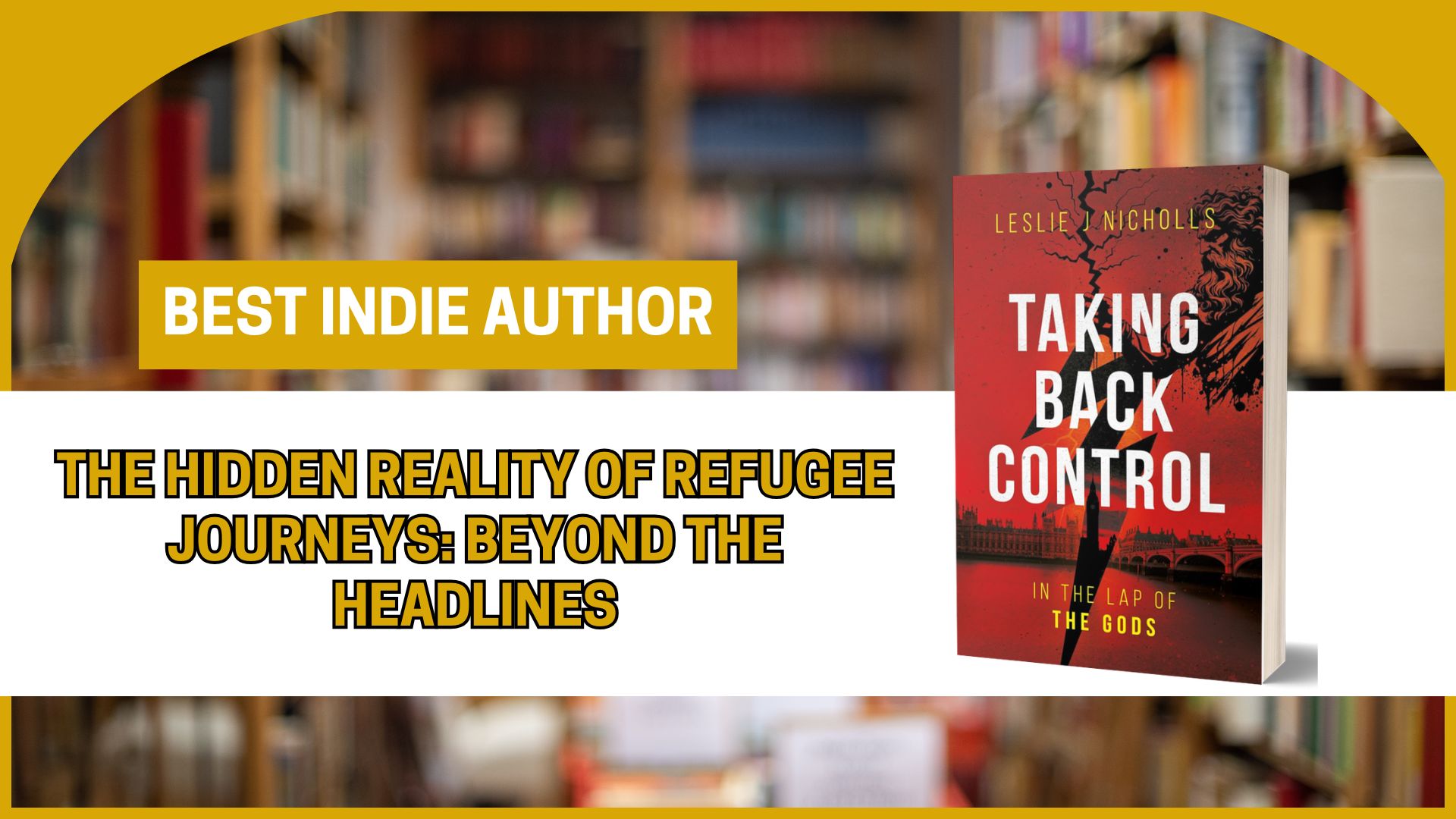
This is where Taking Back Control by Leslie J Nicholls brings a deeper perspective. The story moves beyond surface level portrayals and places readers inside the journey itself. It reveals the harsh realities faced by those seeking safety, while also exposing the structures that shape their path. The narrative does not romanticize the experience. It presents it with clarity, tension, and an unflinching sense of consequence.
Through its characters, the book captures the uncertainty, the fear, and the fragile hope that define these journeys. It shows how quickly circumstances can change and how survival often depends on forces beyond individual control. At the same time, it reflects the broader systems that influence outcomes, from political decisions to the hidden networks operating in the background.
What makes Taking Back Control compelling is its ability to connect personal stories with larger realities. It does not isolate the journey from the world around it. Instead, it shows how deeply intertwined they are. The result is a narrative that feels immediate and relevant, offering insight into an issue that is often misunderstood.
Beyond the headlines lies a truth that is far more complex than numbers or soundbites. It is a truth shaped by human experience, by risk, and by the search for safety in a world that does not always provide it.
Explore the full story here: https://www.amazon.com/dp/B0G4F2KTJC.