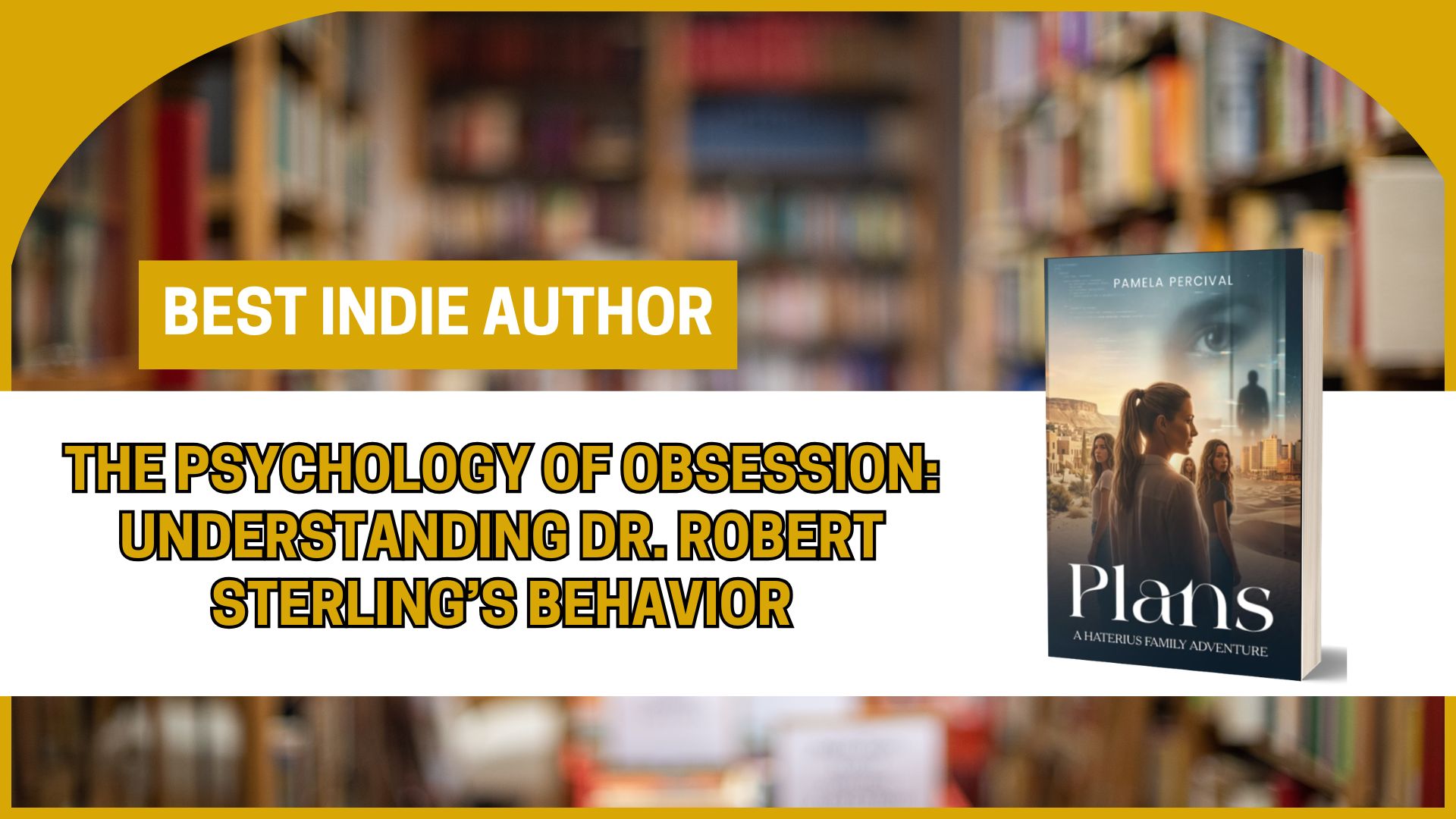
Obsession rarely begins as something loud or obvious. It often arrives quietly, disguised as admiration, curiosity, or misplaced affection. In Plans: A Haterius Family Adventure, Dr. Robert Sterling embodies this unsettling progression, transforming from an intrusive presence into a deeply disturbing threat. His behavior offers a compelling lens into how obsession forms, escalates, and ultimately disrupts both personal and professional boundaries.
At the core of Sterling’s behavior lies a distorted sense of reality. He does not simply admire Aggie Haterius; he constructs an imagined relationship that exists only in his mind. This false narrative allows him to justify actions that would otherwise be recognized as inappropriate or even dangerous. By convincing himself that there is a mutual connection, he removes any internal resistance that might prevent him from crossing boundaries. What makes this particularly alarming is not just the delusion itself, but the confidence with which he operates within it.
Obsession often feeds on proximity and access. Sterling’s position within the academic environment gives him opportunities to observe, approach, and insert himself into Aggie’s world. Instead of respecting professional distance, he uses shared spaces and social settings to tighten his psychological grip. His behavior reflects a need for control, where proximity becomes a substitute for genuine connection. Each encounter reinforces his belief that he belongs in her life, regardless of her clear rejection.
Another defining aspect of his obsession is persistence in the face of resistance. Aggie’s firm boundaries, including legal action, do not deter him. Instead, they appear to intensify his fixation. This reaction highlights a critical element of obsessive behavior: rejection is not processed as a signal to stop, but as a challenge to overcome. The more he is pushed away, the more determined he becomes to assert his presence. This creates a dangerous cycle where the target’s efforts to establish safety inadvertently fuel the obsession further.
Sterling’s actions also reveal a manipulative streak. He does not limit his behavior to direct interaction with Aggie. He attempts to influence others around her, subtly gathering information and inserting himself into her professional and personal circles. This expansion of focus shows how obsession can evolve beyond a single individual into a broader strategy of control. It is no longer just about the person, but about dominating the environment that surrounds them.
What makes his character especially compelling is the contrast between his outward persona and his internal instability. In professional settings, he can appear composed, even respectable. This duality creates tension, as those around him may not immediately recognize the threat he poses. It reflects a real-world truth: obsession is not always visible on the surface. It can exist behind a facade of normalcy, making it harder to detect and address until it escalates.
Aggie Haterius’s response to this behavior adds another layer of depth to the narrative. Her instincts, fear, and determination to protect herself and her work highlight the emotional toll of being targeted by someone like Sterling. The story does not present obsession as a distant or abstract concept. It places the reader directly in the path of its impact, showing how it disrupts daily life, professional responsibilities, and personal safety.
Plans: A Haterius Family Adventure uses Sterling’s character to explore the darker edges of human psychology while maintaining a gripping, character-driven narrative. The tension he creates is not based on sudden action, but on the slow, relentless pressure of someone who refuses to accept reality. This makes his presence all the more unsettling and the story all the more compelling.
For readers drawn to psychological depth, complex antagonists, and high-stakes emotional conflict, this book offers a powerful and memorable experience.