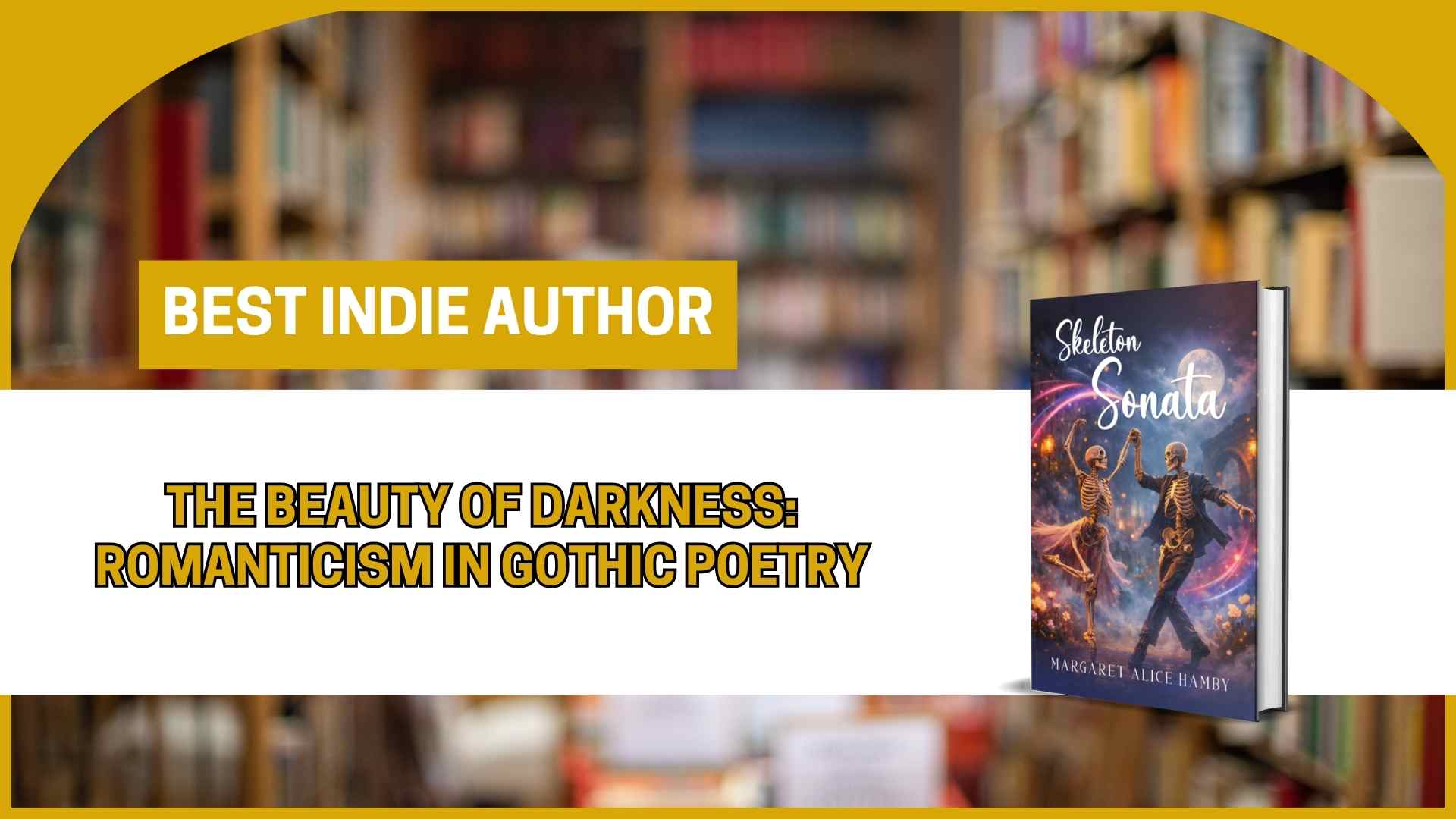
Gothic poetry has always found beauty where others see only fear. In shadowed rooms, moonlit graveyards, restless minds, and broken hearts, it discovers a strange kind of wonder. This is the world Margaret A. Hamby opens in Skeleton Sonata, a collection where darkness does not merely frighten. It sings.
Romanticism in gothic poetry often begins with emotion. It is not cold horror. It is passion, longing, grief, mystery, and awe. The gothic poet looks at death, madness, sorrow, and decay, then turns them into art. In Skeleton Sonata, Hamby follows this tradition with poems that feel haunted yet deeply human. Her work reminds readers that pain can have rhythm, fear can have beauty, and even brokenness can become music.
The title itself captures this balance. A skeleton suggests death, remains, and the body stripped bare. A sonata suggests structure, movement, and music. Together, they create the heart of the book: a dance between the grim and the graceful. Hamby’s poems often move through blood, bones, monsters, anxiety, illness, and grief, but they do so with lyrical force. The darkness becomes more than an image. It becomes an atmosphere.
What makes gothic poetry romantic is its refusal to look away. It does not pretend life is always bright or simple. Instead, it leans into the storm. It asks what longing feels like when hope is fragile. It asks what love looks like near death, what the mind does under pressure, and how the soul survives its own shadows.
Skeleton Sonata is powerful because it gives readers that full emotional range. It offers horror, but also tenderness. It offers fear, but also wit. It offers decay, but also strange beauty. Margaret A. Hamby writes with a voice that feels modern while still carrying echoes of classic gothic literature.
For readers drawn to Edgar Allan Poe, dark romanticism, horror poetry, or emotionally intense verse, Skeleton Sonata is a compelling collection. It invites readers into the dark, not to trap them there, but to show them what can still bloom beneath the moonlight.