In a world increasingly divided between the dogmatic and the disillusioned, there is a growing hunger for fiction that allows wonder and skepticism to coexist. Old explanations do not satisfy everyone, especially when global turmoil, greed, hatred, and violence continue to raise difficult questions. Many people want to believe in a God who can be trusted to intervene, yet they also struggle with the apparent silence that follows humanity’s worst failures. Believers often answer with the familiar principle of free will, which leaves us responsible for resolving the conflicts we create. Indeed.
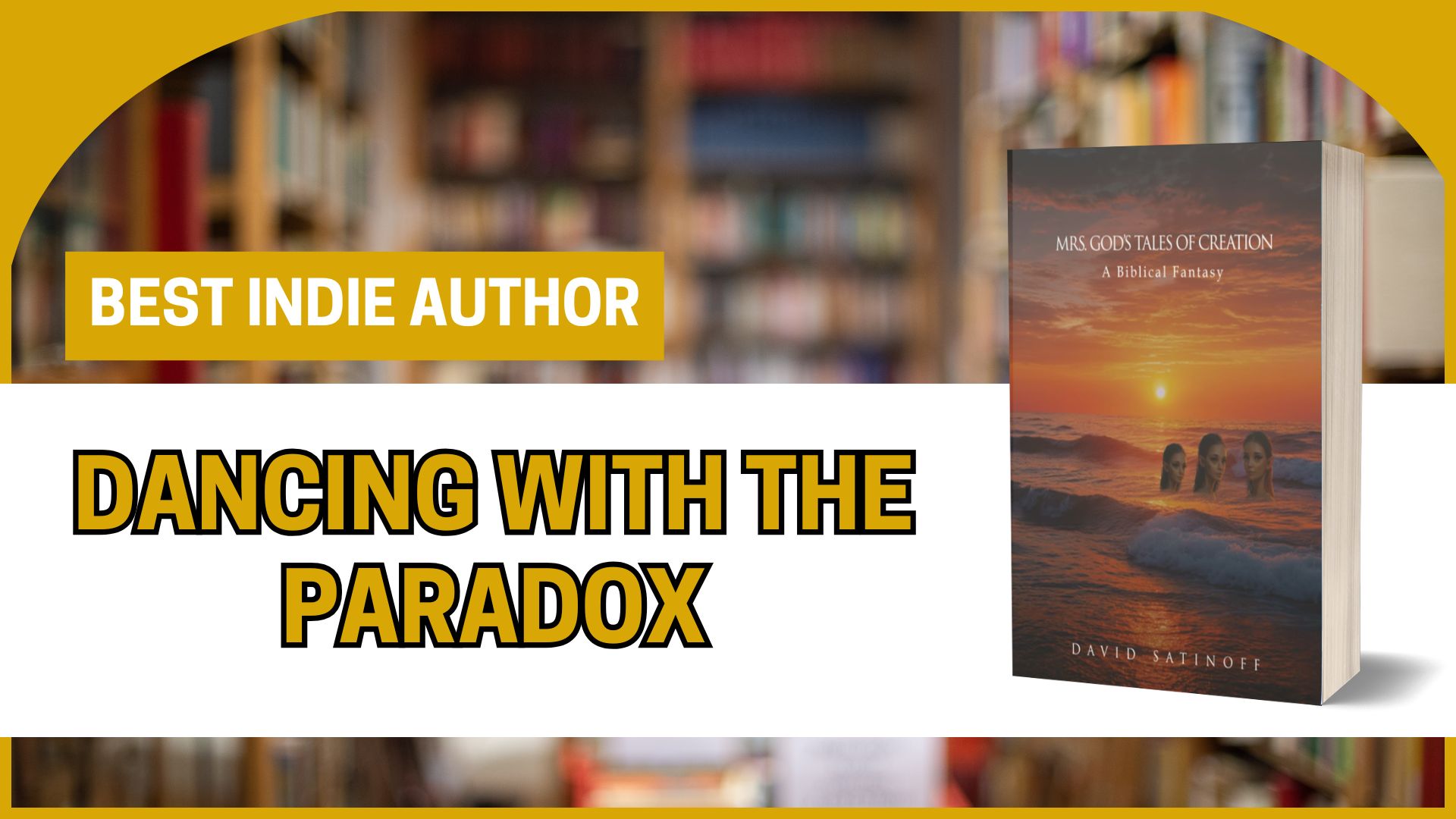
Mrs. God’s Tales of Creation enters this uneasy territory with satire, fantasy, curiosity, and an open invitation to question almost everything. Written by an author who cheekily describes himself as a “devout atheist,” the book presents God as a living, sensitive, and emotional character. It is part novel, part scripted play, part critical reflection, and part romantic comedy. Humor softens the tragedies that have shaped human history without turning the story into a political or religious lecture. This God is not a spokesman for any party or ideology. He remains committed to free will, y’all.
Subtitled A Biblical Fantasy, this audacious double volume is filled with social and cultural references and the natural rhythm of human conversation. Its structure includes extended dialogues between God and Rachel, the “Godd Couple,” whose affectionate arguments establish the book’s playful tone while opening the door to serious philosophical questions.
The story operates on several levels. It includes imaginative characters such as the lizard girls, who are eventually revealed to be hybrid humans, alongside reflections on creation, identity, responsibility, love, and the limits of divine authority. The fantasy may be extravagant, but the questions beneath it are recognizably human.
One of the book’s boldest themes begins when Rachel tells her husband that she believes he may be showing signs of mental decline. God has always understood immortality to mean that death and human illness cannot touch Him, so the suggestion wounds His pride and unsettles His sense of self. Before He can consider less frightening explanations, He confronts the terrifying question at the heart of the problem: What happens if God can no longer serve as God? The possibility of divine dementia becomes a psychological doorway into questions about identity, vulnerability, and the rewards and burdens of responsibility.
As narrator and leading lady, Rachel provides the grounding force. Her love for God is divine in duration but unmistakably human in practice. The couple face the prospect of a record length immortal marriage while devoting themselves to the difficult work of resolving the world’s conflicts. Who needs a trillionaire? Their conversations also wander into the comic details of married life, including a discussion of “conjugal visits” and whether such privileges are intended for prisoners or for the spouses who remain free. Even when the subject becomes absurd, Rachel keeps the discussion rooted in empathy and practical morality.
While God muses on the infinite, Rachel worries about the passengers on the ship of fools. She sees beyond the cape and the Superman exterior to the mild mannered husband underneath. This humanization allows the book to explore enormous themes without treating God as a distant symbol. He can be loving, defensive, uncertain, amused, and overwhelmed. Rachel can challenge Him directly, not because she lacks reverence, but because intimacy gives her the right to demand honesty.
The book ultimately celebrates the paradoxes of everyday living. Its publication history reflects that theme of continuing evolution. The first edition appeared in 1992, and the second edition followed in 2020 with the introduction of the scripted dialogue sections. This third edition continues the process, presenting the universe and the manuscript itself as works in progress rather than finished masterpieces.
By the time readers reach the final Tales and Themes, it becomes clear that Mrs. God’s Tales of Creation is not merely about the beginning of the world. It is about the power of perspective. It invites us to look at our shame, struggles, romances, triumphs, and tragedies as part of a larger and more colorful tapestry of existence. It’s not too late, baby!
Whether you are a believer, a skeptic sitting on the sharp points of the agnostic fence, or someone still waiting to decide, this book offers a seat at an intriguing table. The conversation is lively, the questions are difficult, and the wine of wisdom keeps flowing.
Readers who enjoy the humanization of deities in literature and media will find a compelling blend of parody and profound insight. Join Mrs. God as she challenges her husband to intervene and reveals surprising facets of the divine.
Available on Amazon: https://www.amazon.com/dp/1971610704/