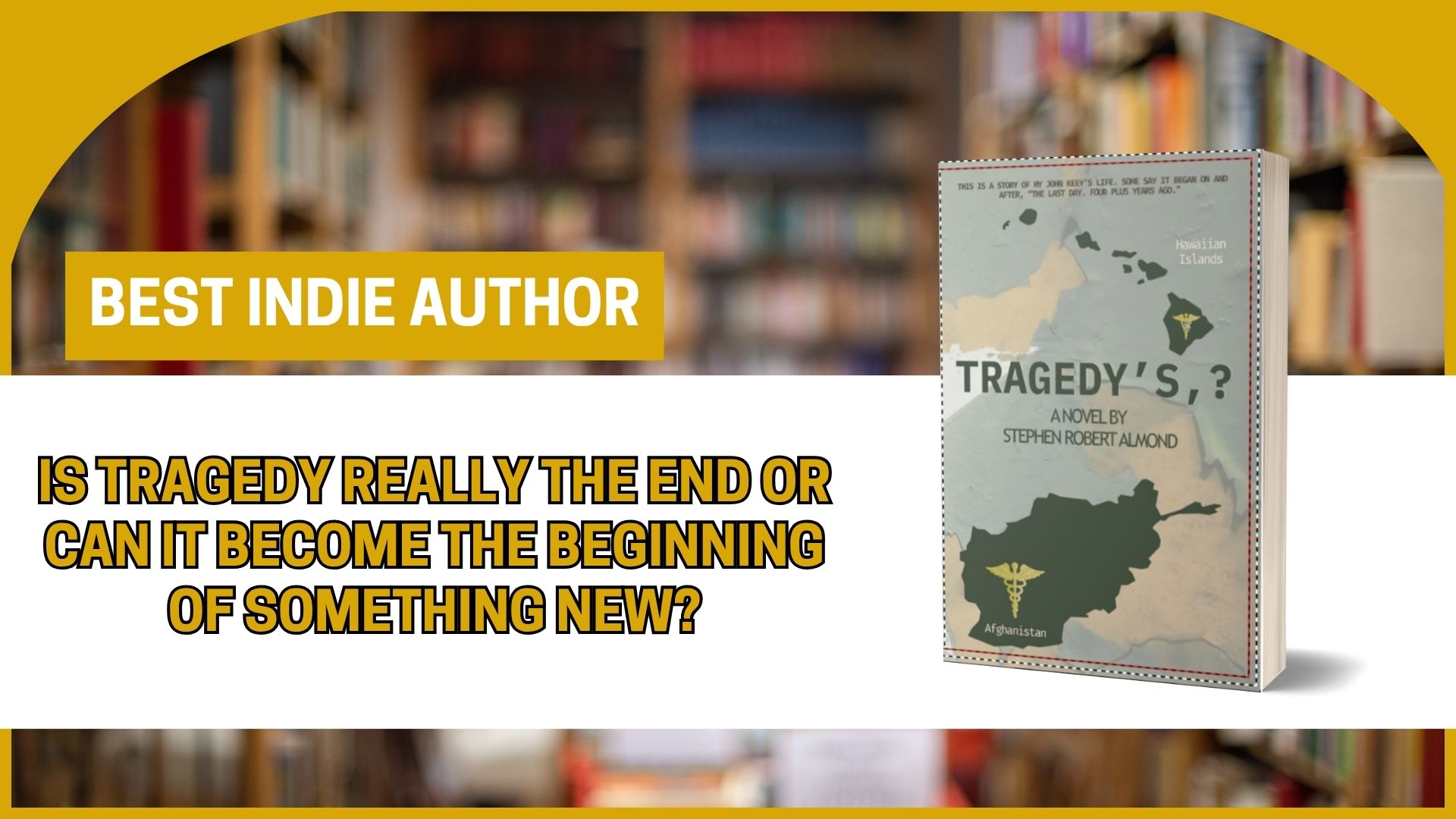
Tragedy has a way of dividing life into two parts: what came before and what came after. One moment, everything feels familiar. The next, plans disappear, relationships change and the future no longer looks the way it once did.
Stephen Robert Almond’s Tragedy’s,? explores that difficult space through the life of John Keeys, an Army trauma surgeon whose own existence is transformed by the kind of suffering he once helped others survive. The novel follows him through military service, catastrophic injury, recovery, love, family, grief and the long process of rebuilding a life after everything changes.
For John, tragedy is not an abstract idea. It has followed him since childhood. He loses his parents when he is young and is raised in Hawaii by his grandparents, Grandpa L and Gramma Gloriana. Their home, faith, humor and love give him stability, helping shape the man he eventually becomes.
As an adult, John chooses a profession centered on helping others. He becomes an Army surgeon and spends years treating soldiers and civilians in Afghanistan. His days are filled with wounds, emergencies, difficult decisions and the constant pressure of saving lives. Medicine gives him purpose, but it also places him close to the realities of war.
Then comes what John repeatedly calls “The Last Day.”
After suffering devastating injuries, he spends four years in a coma. When he wakes, he discovers that parts of his body have been reconstructed, several fingers are gone and the surgical career that once defined him may be impossible to continue. The realization forces him to confront a painful question: who is he if he can no longer live the life he had built?
This is where Tragedy’s,? becomes more than a story about survival.
John must learn how to live again, not simply how to stay alive. He has lost years, independence, certainty and pieces of his identity. Yet the novel gradually shows that a changed life does not have to be an empty one.
His connection with Janet becomes central to that transformation. Their relationship is shaped by trauma, separation, complicated circumstances and their own experiences of loss. Eventually, their reunion gives both characters another chance to imagine a future together. John’s joy when he finds Janet alive becomes one of the clearest moments in the book where tragedy begins giving way to renewal.
John also discovers a new way to serve others. Although he can no longer return to surgery as before, he later works in counseling and trauma care, drawing upon his own experiences to help people dealing with injury, psychological pain and disrupted careers. Instead of erasing what happened to him, he uses it to understand others more deeply.
That idea ultimately gives the novel its emotional foundation.
Near the end, John and Janet leave behind a message centered on persistence, love and the belief that tragedy does not have to possess the final word. Their lives remain marked by painful experiences, but they also contain family, purpose, recovery and connection.
Tragedy’s,? by Stephen Robert Almond invites readers to ask a difficult but hopeful question: when one life ends, can another begin?
For readers who appreciate stories about military service, survival, romance, family, faith, recovery and second chances, this novel offers a journey through loss toward the possibility of something new.
Read Tragedy’s,? by Stephen Robert Almond on Amazon: https://www.amazon.com/dp/B0H2MZKVG1/