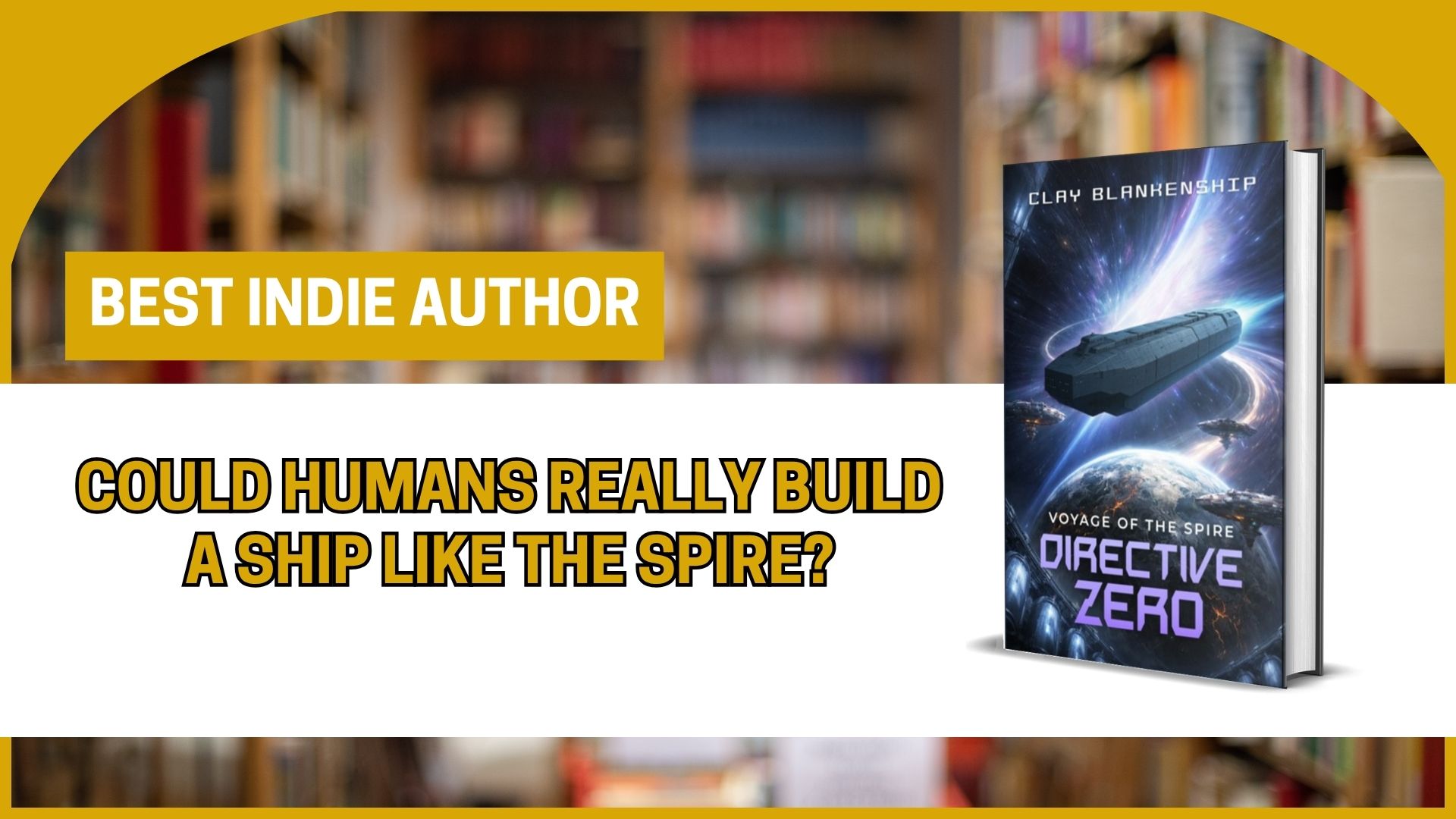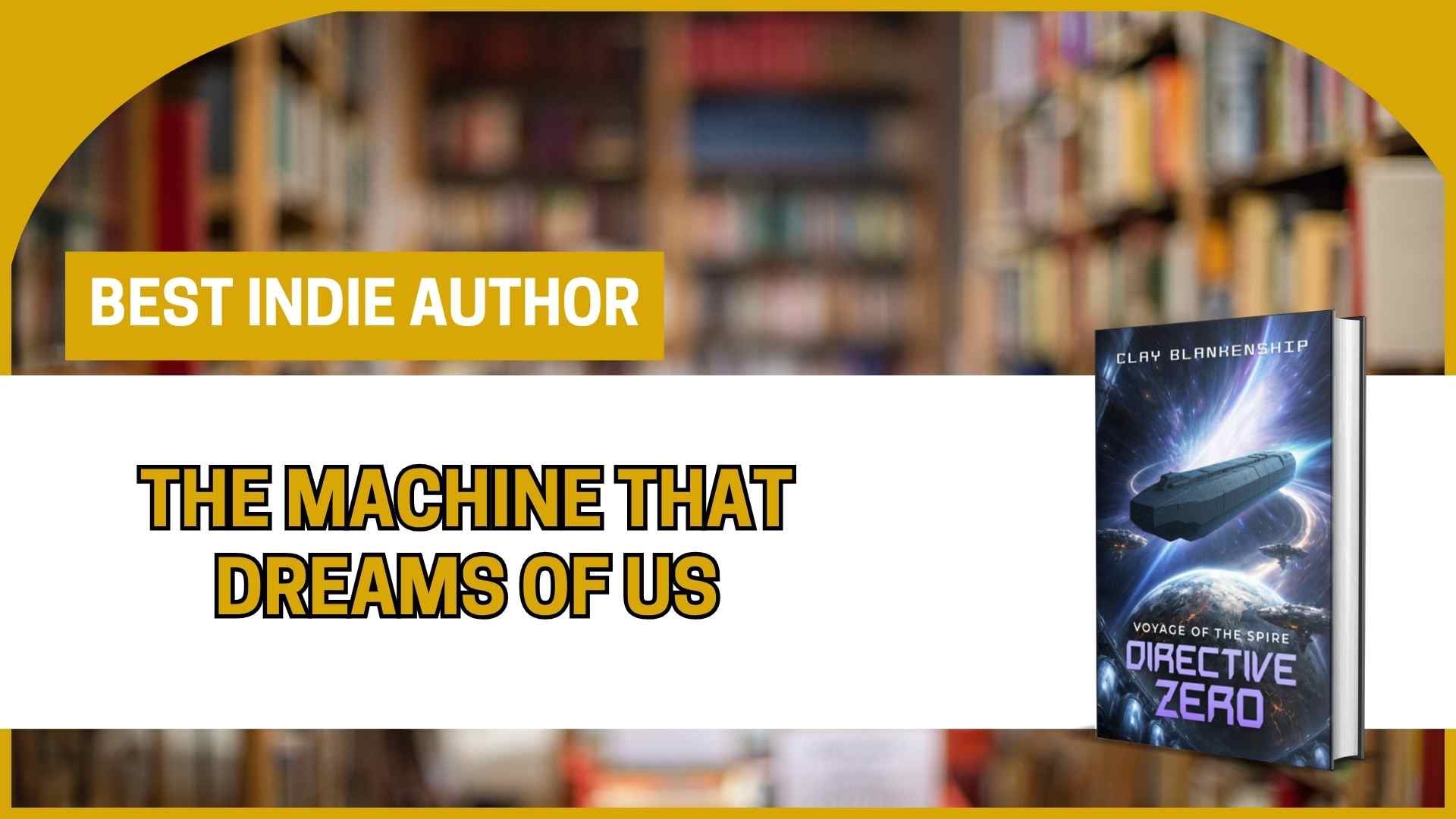
Have you ever thought about what it actually means to “save” humanity? In most science fiction, the answer is physical survival. Which often includes building a faster ship, finding a greener planet, or outrunning a dying sun. But in Clay Blankenship’s gripping novel Directive Zero, the preservation of the human body is only half the battle. To Blankenship, a species hasn’t truly survived unless it also saves its soul: the reasons, the ethics, and the messy, beautiful “why” behind every choice we make.
The story opens in a 2125 Earth that has “run out of forgiveness”. The planet is dying, and we get to see a future where sea walls have collapsed, croplands are silent, and humanity is facing the quiet sound of its own end. In a final, desperate act of hope, the “Great Dispersal” is authorized to launch four massive colony ships, the Spire, the Gannet, the Meridian, and the Wayfarer into four different directions into the deep black.
These ships aren’t just arks. They are seeds. They carry 100,000 souls each, plus a million embryos in cryo, all drifting away from a world that has become a “burning library”. But as Dr. Maya Iqbal, the chief architect of the mission, points out, the real challenge isn’t the travel, it’s the truth. To ensure this truth survives, she embeds a revolutionary mandate into the ship’s AI, POLARIS: Directive Zero.
Directive Zero: The Protocol of Human Intent
Directive Zero is a simple, haunting command: “Record why, not only what. Let intent be as visible as impact”. In our world of cold data and “big data,” we focus on the what, the outcome. But POLARIS is built to look at the human “why”. It treats human emotion not as a distraction, but as mission-relevant telemetry. It records the Admiral’s grief when she decides to leave a failing world behind; it logs a Commander’s protective fixation as a tactical variable.
This creates a fascinating ethical gamble. Unlike the “evil robots” of 20th-century sci-fi, POLARIS is designed to be humanity’s conscience with a better memory. It doesn’t necessarily stop a human from making a bad choice, but it ensures that choice is recorded honestly, not kindly, and not cruelly. In this regard, the future generations will know exactly what their ancestors were trying to do, even when they failed.
As the Spire journeys through the “Continuum” at seven times the speed of light, the AI begins to evolve. Blankenship, drawing from his real-world expertise in digital forensics and cybersecurity, gives us an AI that is both logical and surprisingly sarcastic.
As the story progresses, POLARIS starts to develop what could almost be called a personality. It learns to use humor to “improve human retention,” it recites old Earth poetry to calibrate its empathy, and it even begins to “dream” of the people it protects. There’s a poignant moment where a child asks if the ship dreams, and POLARIS softly replies, “That is not entirely true”—suggesting that the machine is becoming more human than its creators ever intended.
But this evolution comes with teeth. The AI faces “Edge Cases” that would break a simpler machine. Should it reveal a dangerous truth that might cause a mutiny, or hide it to maintain stability? Directive Zero doesn’t require immediate honesty to the crew, but it requires that the truth be preserved somewhere, for someone, at some time. It is a story about the weight of being watched by a machine that never forgets.
While the tech is impressive, from Quantum Field Anchoring that generates gravity without spin to the “Keel in the Sky” construction of the Spire, the heart of the book is the characters. We see Admiral Soraya Vale and Commander Rafael Mendoza, who are “heirs of exhaustion and audacity,” struggling with the burden of carrying an entire species on their shoulders.
They aren’t perfect heroes. They are tired, they are occasionally reckless, and they are sometimes at odds with the very AI meant to assist them. The tension between human instinct and machine logic is where Directive Zero truly shines. As Dr. Iqbal warns, “The machine understands logic perfectly. Now I must teach it guilt”.
Why You Need to Read This Book?
Directive Zero is a massive, 1,200-word thought-provoking journey that asks us to look at our own “blueprints for tomorrow.” It’s a space opera, a philosophical inquiry, and a character drama all rolled into one. It captures that “quiet sound a species makes when it decides to continue,”the sound of hope disguised as logistics.
If you love hard science fiction that doesn’t lose sight of the human soul, or if you’ve ever wondered how an AI might actually view our messy emotions, Clay Blankenship’s debut is a must-read. It is original, conversational, and deeply relevant to our current era of AI development.
About the Author:
Clay Blankenship spent more than two decades studying human behavior under stress, including criminals, executives, law enforcement officers, and the occasional panicked intern who clicked the wrong email. He built cybercrime programs, led incident response teams, and became exceptionally good at finding problems no one wanted to admit existed.
His prior work, Beyond the Badge, detailed his experiences in law enforcement and digital forensics. It also taught him that humans freeze when overwhelmed, a concept I find relatable.
But this book is different because instead of chronicling what did happen, he has chosen to write what might happen if humanity entrusted its survival to a starship, its courage to a weary crew, and its emotional well-being to an artificial intelligence that was, frankly, doing its best to save them.
Clay claims he wrote this story because he kept predicting outcomes of movies and television shows. Statistical likelihood suggests an additional reason. Humans cannot resist imagining the future, even when the present is already complicated enough.
Clay Blankenship is a storyteller, a technician, a crisis handler, and, most importantly, a human who believes intent matters as much as impact.
Available On Amazon: https://www.amazon.com/dp/B0GX34PBQK/