Journalism has long been regarded as one of the pillars of a free society. At its best, it informs the public, challenges those in power, and gives a voice to stories that might otherwise remain unheard. But in an age of instant communication and relentless competition, an important question has emerged. What happens when journalism becomes less about informing and more about influencing?
Modern reporting moves at extraordinary speed. News breaks within seconds, spreads across countless platforms, and reaches millions before the full picture has even emerged. This demand for immediacy has transformed the media landscape. Accuracy competes with urgency, and careful investigation often struggles to keep pace with the pressure to be first.
At the same time, public confidence in the media has become increasingly divided. Some view journalists as essential watchdogs who expose corruption and defend accountability. Others believe sections of the media shape narratives, amplify conflict, or selectively present facts to influence public opinion. Whether these perceptions are justified or not, they have changed the relationship between the press and the public.
The ethical responsibility of journalism has never been greater. Every headline, image, and broadcast has the power to influence emotions, shape debates, and affect decisions. Responsible reporting demands balance, verification, and context. Without those principles, information can become a powerful tool that drives fear, deepens division, or alters the course of public events.
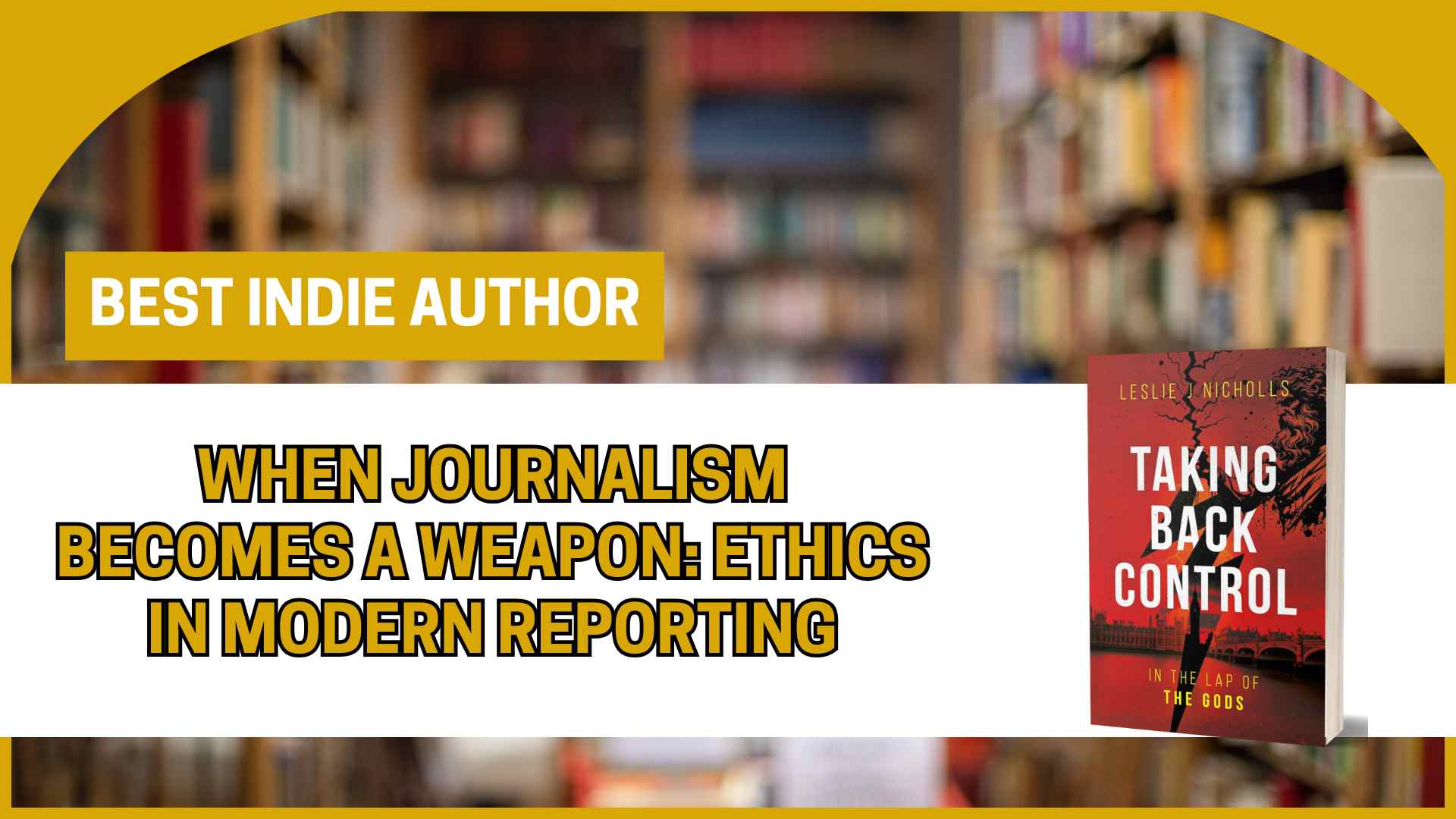
Taking Back Control by Leslie J Nicholls explores this complex relationship with remarkable depth. The novel places journalism alongside politics, law enforcement, intelligence agencies, and public opinion, showing how information can become as influential as any weapon. News does not simply report events. It shapes them, influences reactions, and changes the direction of the story itself.
Nicholls presents a world where media organisations, political institutions, and hidden networks intersect in unexpected ways. Readers are drawn into a fast moving narrative where headlines influence investigations, exclusive stories shift public perception, and information becomes one of the most valuable forms of power. The novel asks readers to consider whether the media merely reflects society or actively helps shape its future.
What makes Taking Back Control especially compelling is its balanced approach. It neither condemns nor glorifies journalism. Instead, it explores the difficult ethical choices that arise when reporting has the power to affect lives, influence governments, and alter the course of justice. It reminds readers that facts carry responsibility and that every story has consequences beyond the printed page.
For readers who enjoy political thrillers rich with suspense, social commentary, and moral complexity, Taking Back Control offers a gripping experience. It challenges assumptions about truth, influence, and accountability while delivering a story that feels strikingly relevant to the world we live in today.
Explore the full story here: https://www.amazon.com/dp/B0G4F2KTJC.