
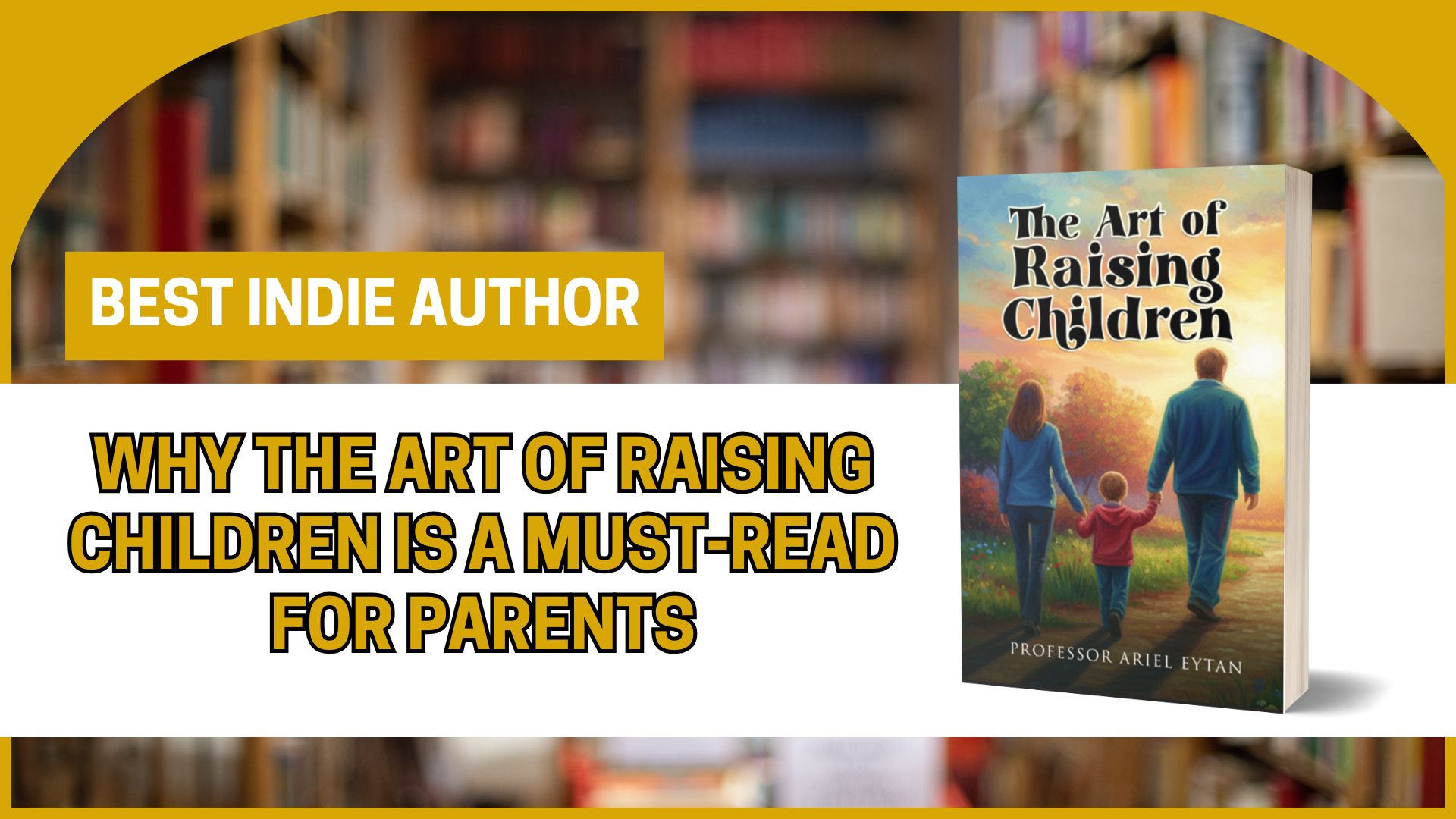
In today’s fast-paced and ever-changing world, parenting has become more challenging than ever. With endless advice available online, shifting educational trends and increasing pressure to “get it right,” many parents feel overwhelmed and uncertain. This is exactly where The Art of Raising Children by Professor Ariel Eytan stands out as an essential guide, a must-read for parents who want clarity, confidence and a meaningful approach to raising their children.
What makes this book truly powerful is its ability to simplify parenting without oversimplifying children. Rather than offering rigid rules or one-size-fits-all solutions, Professor Eytan presents a thoughtful philosophy rooted in understanding how children actually grow, learn and develop. The book invites parents to shift their mindset from controlling behavior to guiding potential.
One of the key reasons this book is so valuable is its focus on raising independent thinkers. In a world that increasingly rewards creativity, adaptability and problem-solving, traditional parenting methods often fall short. This book emphasizes the importance of encouraging curiosity, allowing children to ask questions, explore ideas and take ownership of their learning. Instead of memorizing information, children learn how to think and that makes all the difference.
Another reason The Art of Raising Children is a must-read is its emphasis on teaching through example. The book highlights a simple but often overlooked truth: children learn more from what parents do than what they say. By modeling values such as responsibility, integrity and perseverance in everyday life, parents naturally instill these qualities in their children. This approach transforms parenting into a powerful, lived experience rather than a series of instructions.
What also sets this book apart is its unique integration of global educational perspectives. By combining the discipline and strong work ethic found in East Asian education systems with the emphasis on questioning, discussion and critical thinking rooted in Jewish traditions, the book offers a balanced and effective framework. This blend helps children develop both structure and creativity, two essential skills for success in the modern world.
The book also places strong emphasis on relationships. It highlights the importance of building trust, respect and communication between parents, children and teachers. When children feel supported and valued, they are more confident, more engaged and more willing to take on challenges. This holistic approach ensures not only academic growth but emotional well-being as well.
Perhaps most importantly, The Art of Raising Children prepares both parents and children for the future. It recognizes that the world is changing rapidly and the skills children need today go far beyond traditional education. By encouraging independence, critical thinking and intellectual autonomy, the book equips children to navigate life with confidence and resilience.
For parents who are tired of conflicting advice and are searching for a deeper, more meaningful way to raise their children, this book offers exactly that. It is not just a guide; it is a new perspective on parenting.
If you want to raise confident, capable and thoughtful children who are prepared for the realities of the modern world, The Art of Raising Children is not just worth reading; it is essential.


