Most history books teach readers what happened. They explain events, timelines, and outcomes with precision and distance. While this approach is informative, it often leaves readers emotionally untouched. Witnessing A Flourishing Poland (Polska) by James C. DeHeve feels different because it does not simply recount history. It invites the reader to step inside it, to walk the streets, share meals, build friendships, and feel the weight and triumph of a nation through lived experience.
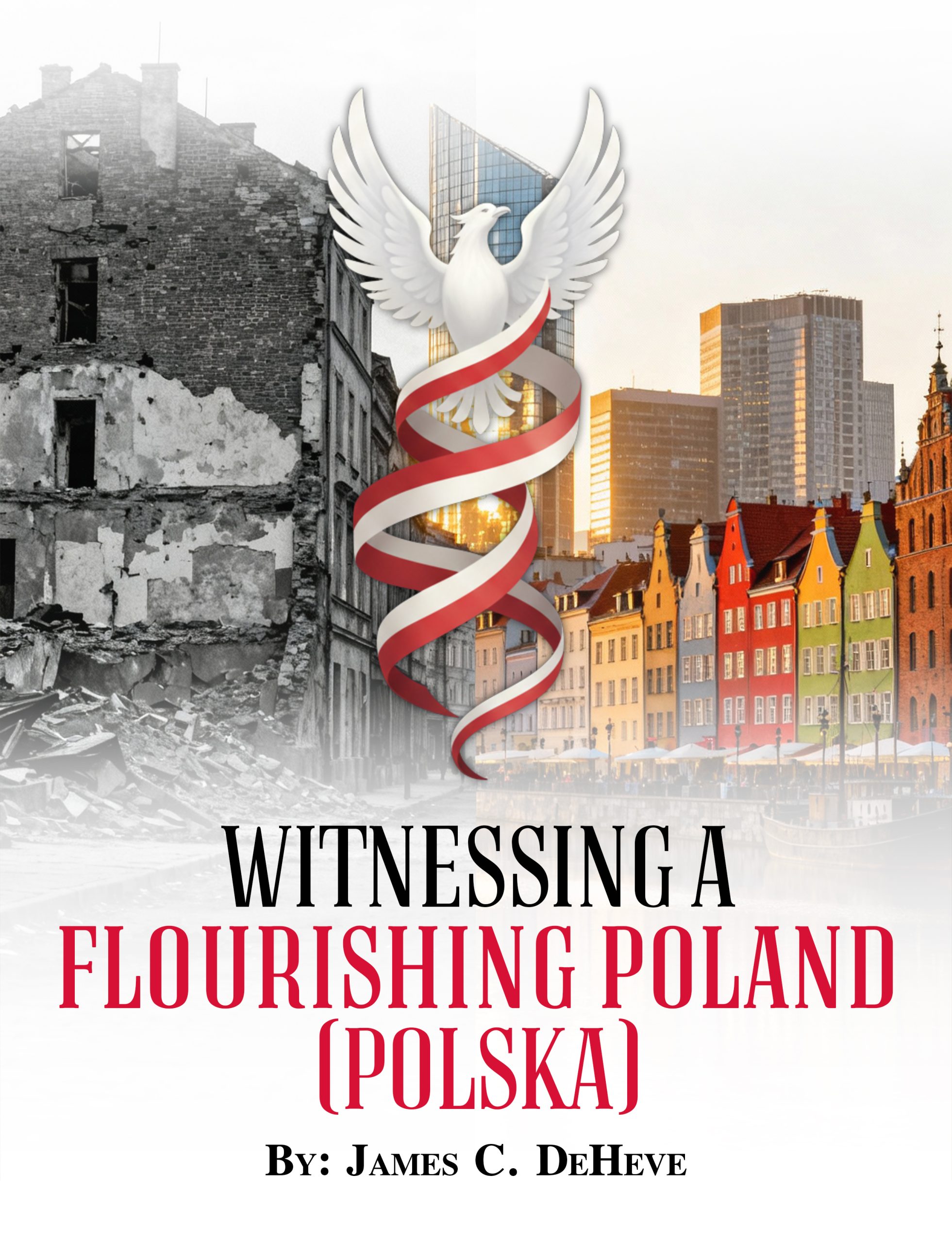
From the opening pages, the book establishes a powerful connection between past and present. Instead of beginning with abstract dates or political summaries, DeHeve starts with personal memory, ancestry, and curiosity. This immediate human entry point creates a sense of intimacy that traditional history books often fail to achieve. Readers are not positioned as observers looking back from a safe distance. They are companions on a journey unfolding in real time.
One reason the book resonates so strongly is its reliance on travel as a narrative lens. DeHeve does not describe Poland as an idea. He describes Poland as a place. Cities such as Warsaw, Toruń, Wroclaw, and Malbork are not reduced to historical footnotes. They are experienced through rebuilt streets, restored squares, memorials, and everyday life. Seeing a city that was once nearly destroyed now thriving allows readers to understand resilience in a way that no statistic ever could.
Equally important are the relationships that shape the story. Friendships with Polish citizens form the emotional backbone of the book. Conversations, shared laughter, acts of generosity, and moments of quiet reflection reveal that history lives on in people, rather than just in archives. Through these personal connections, readers gain insight into how past occupations, faith, sacrifice, and resistance still influence attitudes, values, and national pride today.
Another distinction lies in how the book blends reflection with observation. DeHeve does not claim the authority of an academic historian. Instead, he openly acknowledges his perspective as a witness. This honesty builds trust. Readers are not asked to accept conclusions as fixed truths. They are encouraged to reflect alongside the author, drawing meaning from what is seen, felt, and experienced. This approach transforms history from something that happened to someone else into something that still matters now.
Traditional history books often separate emotion from analysis. This book refuses that separation. The result is a narrative that combines sorrow, admiration, gratitude, and hope within a historical context. Poland’s story of survival and renewal becomes not just a national account but a universal reminder of what societies can endure and overcome.
For readers seeking more than dates and definitions, this book offers something rare. It shows how history breathes through people, places, and lived moments. To understand Poland not only as it was, but as it is and why it matters, reading Witnessing A Flourishing Poland (Polska) by James C. DeHeve is strongly recommended.
James C. DeHeve’s Witnessing A Flourishing Poland (Polska) is now available on Amazon: https://www.amazon.com/dp/1971228389/.