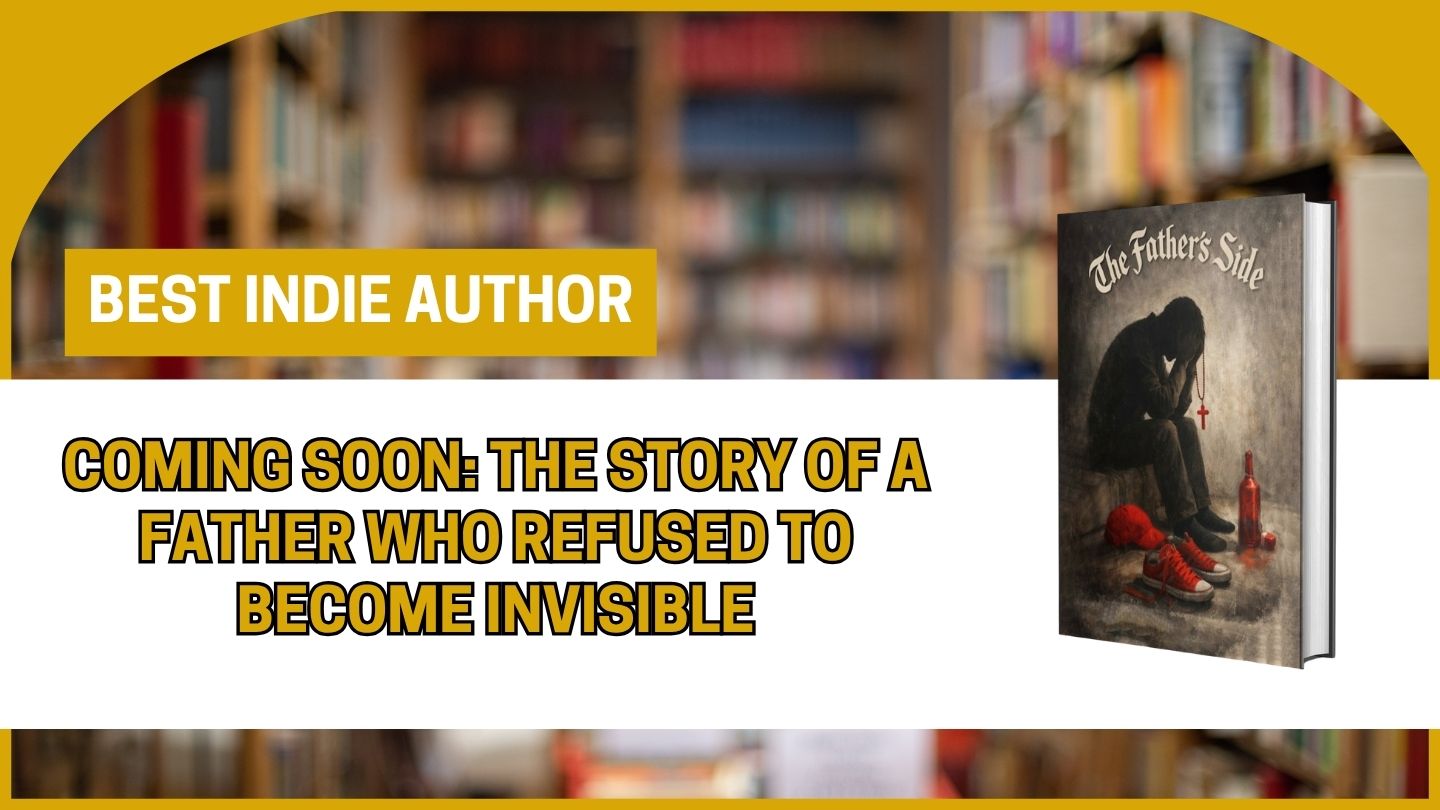
Fatherhood is often described through moments of celebration: the first time a man holds his child, the first smile, the first word and the first uncertain steps across a room. But behind those milestones, many fathers carry private fears that are rarely discussed: the fear of failing, of not being respected and of slowly losing their place in the life of the child they love.
In his forthcoming book, The Father’s Side, author Jessie J. Page brings those fears into the open through an honest and deeply personal account of young fatherhood, family conflict, sacrifice and emotional survival.
The story begins with a young man who believes he still has time to grow up. At eighteen, his life is built around work, friends, freedom and the belief that adulthood will arrive gradually. Instead, responsibility enters his life without warning. A relationship becomes serious, an unexpected pregnancy changes every plan and fatherhood forces him to confront parts of himself he has never examined.
Becoming a father does not instantly turn him into a perfect man. It exposes his immaturity, pride, anger, fear and uncertainty. At the same time, it awakens a kind of love more powerful than anything he has known before. His daughter becomes the center of his world and the reason he begins trying to become someone better.
That transformation is at the heart of The Father’s Side. The book does not present fatherhood as a simple journey from irresponsibility to maturity. It shows growth as something painful, uneven and deeply human. The narrator makes mistakes, reacts emotionally and struggles to communicate, but his devotion to his daughter remains constant. As he reflects, fatherhood did not magically make him a man; it made him someone who was trying to become one.
The struggle becomes even more complicated when two families, with different expectations and ideas about stability, begin influencing the child’s future. Living under another family’s roof leaves the young father feeling judged, dependent and increasingly excluded from important decisions. The more he tries to prove that he belongs, the more temporary his place seems to feel.
What begins as tension gradually becomes something deeper: the fear of being emotionally erased while still standing in the same room as his child. He is present, working, providing, loving and caring, yet he begins to wonder whether others are already imagining a future without him.
This is what makes Jessie J. Page’s story so compelling. The Father’s Side is not simply about one relationship or one household. It speaks to fathers who have felt unheard, underestimated or treated as optional figures in their children’s lives. It also challenges readers to consider how fear, family loyalty, pride and unresolved conflict can turn people who love the same child into opposing sides.
Raw, vulnerable and emotionally direct, The Father’s Side gives voice to a father who is not claiming perfection. He is asking to be seen.
Coming soon, Jessie J. Page’s powerful story reminds us that some fathers are not trying to walk away. They are fighting quietly, every day, not to disappear.