Organised crime is often pictured as chaotic, violent, and driven by impulsive individuals. In reality, the most successful criminal networks can operate with the discipline of major corporations.
They have leadership structures, financial objectives, internal responsibilities, communication systems, security procedures, trusted associates, and carefully managed areas of operation. Some even divide activities by territory, specialist function, or market, making the organisation more efficient and much harder to dismantle.
At the top may sit a small group of decision makers who rarely become involved in everyday criminal activity. Their role can focus on strategy, finance, expansion, risk, and relationships. Beneath them are people responsible for transport, recruitment, protection, financial movement, intelligence, technology, and enforcement.
This separation creates protection.
If one part of the organisation is exposed, senior figures may remain untouched because they are removed from the activity itself. Instructions can pass through several people before reaching those who carry them out. Money can move through multiple accounts, businesses, countries, and intermediaries before reaching its final destination.
The result is a criminal structure that can resemble an international company more closely than a traditional gang.
Profit remains central. Criminal networks study opportunity, competition, risk, and demand. They adapt when markets change. They move resources when one area becomes too dangerous. They invest in technology, security, and people who can protect their interests.
Some operations may also depend on legitimate professionals. Lawyers, accountants, consultants, business owners, technical specialists, and investors can provide knowledge or access that strengthens a network. Not everyone involved necessarily sees the entire structure. That can make responsibility harder to trace.
International operations create even more distance between leadership and consequence. A decision made in one country can result in exploitation somewhere else. The people earning the greatest rewards may never see those affected by their decisions.
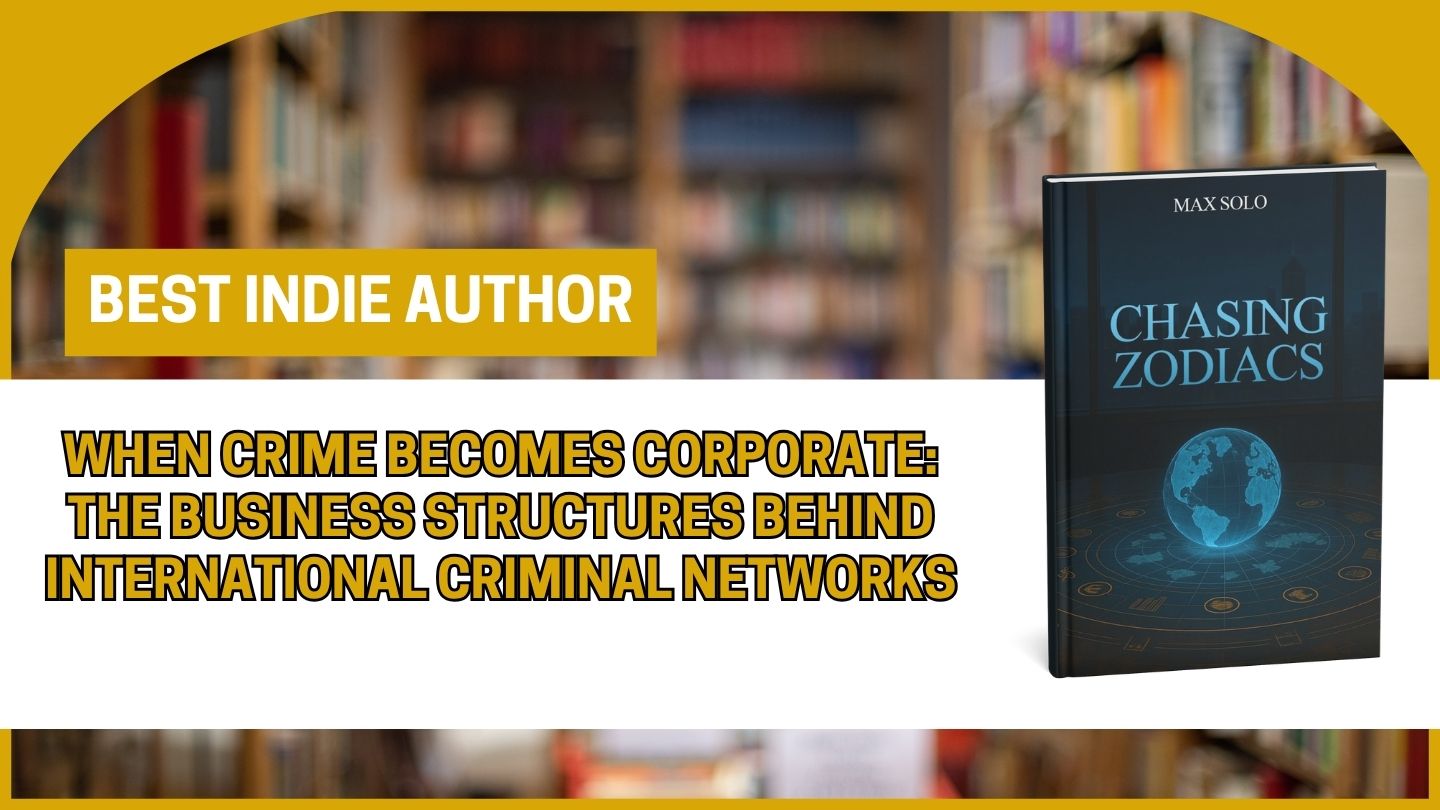
This corporate approach to crime sits at the centre of Chasing Zodiacs: To Repair the Soul of Humanity by Max Solo.
The novel introduces the Zodiac Programme as a powerful international organisation shaped by wealth, intelligence, influence, planning, and secrecy. Its activities are approached with the language of markets, profitability, threats, opportunities, strategy, and long term survival.
Max’s investigation begins to reveal something more disturbing than a group of ordinary criminals. It exposes a system.
That distinction matters.
Individuals can be arrested. Operations can be disrupted. Money can be seized. But when crime is built into a structured international network, removing one person may do little more than create a vacancy.
Chasing Zodiacs explores what happens when criminal ambition adopts corporate discipline and when exploitation becomes part of a carefully managed business model. The most dangerous organisation may not be the one that appears lawless. It may be the one that looks organised enough to belong in a boardroom.